Why skateboarding is more than a sport in Nigeria

By Maya Baylis
When asked who else he saw skateboarding when he was young, Nigerian skater Samuel “Kaizer/Ziggy” Zakari chuckled, “that’s a funny question because nobody even knew what a skateboard was.”
In 2010, skate legend Tony Hawk had already retired from X-Games competitions when Zakari, 17 at the time, tracked down his first skateboard. His mind looping Tony Hawk videogames, Zakari bought his first board having never seen anyone skateboard in person. He stayed up practicing into the night hoping his dad wouldn’t hear the rolling wheels outside their apartment. “It was just me in the dark,” Zakari recalled.
Despite its popularity in other countries, Zakari said skateboarding was foreign to most Nigerians. To him, “it was like a new reality opened up.”
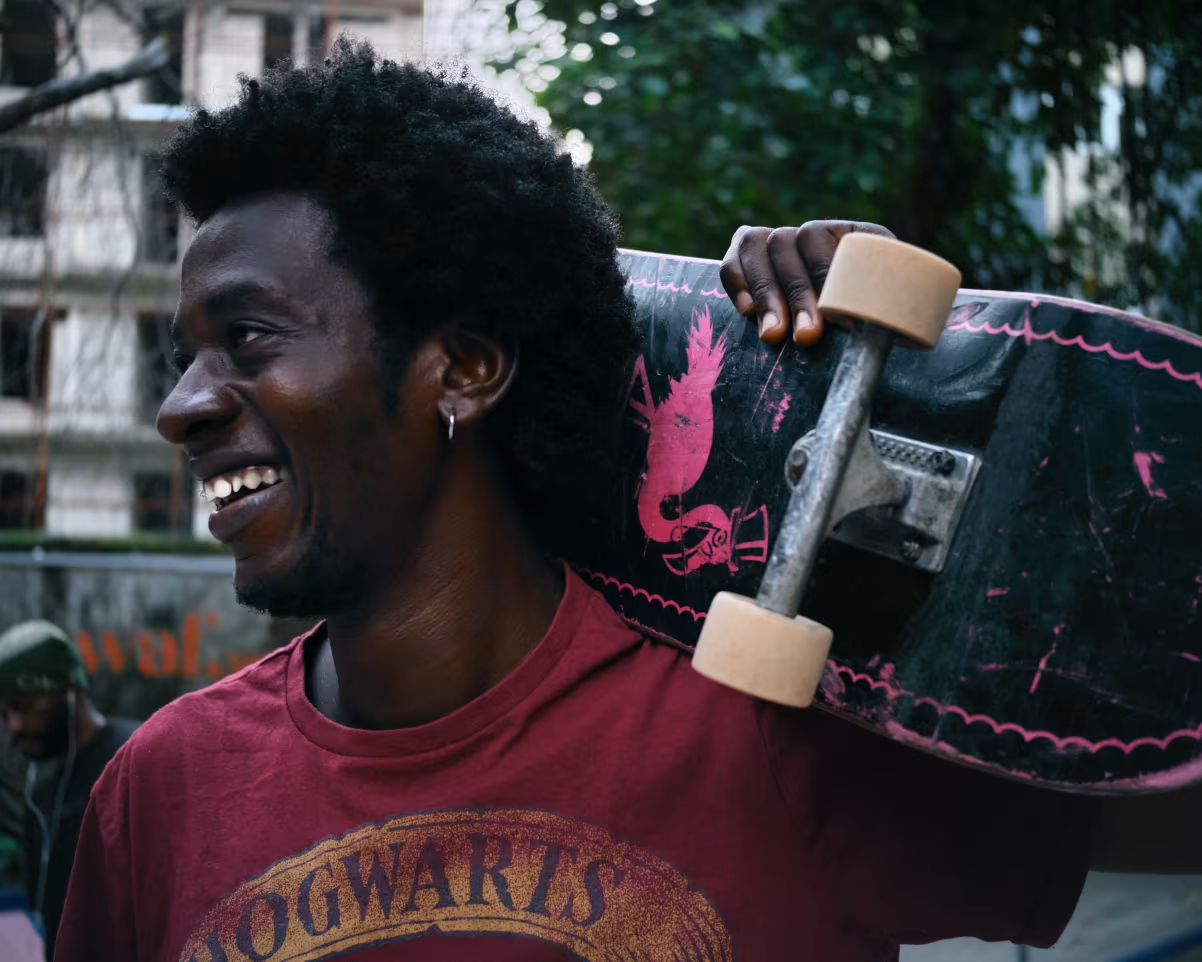
Zakari, now 31, leads Super Glider House, a skateboarding coaching and management agency, building opportunities for young skaters. He runs weekly skateboard clinics for kids of all ages at WAF skatepark in Lagos, Nigeria.
WAF Park, built in 2024 on the grounds of a former colonial prison, is the first public concrete skatepark in Nigeria. The project was spearheaded by WAFFLESNCREAM also known as waf., a skate culture and fashion brand, pioneering the emerging skateboarding scene in the country.
This year Team Nigeria Skateboarding was established, the official national team, backed by the Roller Sports Federation of Nigeria (RSFN), offering a pathway to professional sponsorships and international competitions. It’s a far cry from when Zakari first picked up a board.
“It was like therapy”
When Zakari started out, he taught himself using YouTube videos, practicing on empty basketball courts, his solution to Lagos’ rough roads. Elders would shout out “get a job!” as he rolled past.
Zakari finally found a small group of musicians, street dancers and creatives who felt the same connection to skating.
“We didn’t even really see it as a sport,” he said. “It was like therapy for us, but we didn’t know it at that time.”

Together, they scouted smooth concrete and street features in parking garages or the empty forgotten spaces around the National Stadium in Lagos. The group gradually grew despite no official recognition or gathering space. They would often be chased away by security or get their boards confiscated, Zakari recalled.
Solidifying community with concrete
Zakari noticed younger kids watching him, intrigued. In those eyes, he says he recognized the desire for guidance that he also felt. He loaned youngsters his board and gave them tips as they patiently waited for a turn.
“It was a part of me to do this, to empower these kids because when I started, nobody was there to inspire me,” Zakari told CNN.

In 2023, waf. collaborated with Wonders Around the World, a volunteer-run nonprofit that builds free public skateparks in underserved regions, including Africa, Asia and central America. A crew of local skaters and international volunteers hand-built WAF Park.
It was the creation of the park, giving skaters an official hub in Lagos, that formalized Zakari’s mentorship. His Super Glider House offers private coaching for a small fee, and athlete management, and Zakari also holds weekly group skate clinics at the park, sponsored by the waf. team.
Zakari said his training sessions focus not just on skateboard tricks but also other lessons skating can teach — kindness, focus, and persistence.
“We had a community before the WAF Park … the community was bubbling, gaining traction,” said Zakari. “The park helped solidify the community.”

Fahd Bello, an original member of waf. and a professional skater, agreed. “This park is a go-to space for everybody here,” he said. “A lot of people down here have had nothing, and skateboarding has created new pathways.”
From skating barefoot to an Adidas campaign
Joseph Omojuwa, a 16-year-old emerging star, started skating around the same time the WAF park was finished. Zakari gave him the nickname Skywalker and took him under his wing.
“At that time, he had no shoes. He would come skate with his bare feet. I would give him my board,” said Zakari.

Omojuwa had watched the park being built, enthralled. “I didn’t know what a skatepark was,” he said. After several days of borrowing boards, Zakari arranged for him to get a board, wheels and shoes — all donated by skate companies.
“From then I started skating every day,” said Omojuwa, “from around seven in the morning until 10 o’clock when they turn off the lights.”
Last January, Omojuwa, with Zakari as his coach, sponsored by the RSFN, traveled to the neighboring country of Benin for the Francophone Youth Skate Championship, where Omojuwa won gold.
Most recently Omojuwa starred in waf.’s collaboration with Adidas in an international campaign modeling the sportswear company’s new shoes designed with waf. creative directors and inspired by Lagos’ skate scene.
The promotional photoshoot featured waf. community members rather than models, Omojuwa at the center as well as Zakari, Bello, and co-founder and creative director Jomi Marcus-Bello.
Institutional backing
Yet, part of Omojuwa’s story shows the sport still has a way to go in terms of formal recognition in Africa.
Team Nigeria Skateboarding, only formalized this year, had believed that Omojuwa’s gold at the Francophone youth championship meant he automatically qualified for the 2026 Youth Olympics in Dakar, Senegal. But they found out that the Benin competition was not officially recognized as an Olympic qualifier by the Nigerian Olympic Committee and World Skate, the governing body for roller sports recognized by the International Olympic Committee. By that point, Omojuwa missed getting a spot on the Nigerian team.
“I believe when administrative systems fall short, community-led initiatives have to step up,” Imoh Ekasi-Otu, Nigerian American skater and the director of marketing and skateboarding development for RSFN told CNN.

“There are plenty of youth in Africa that could compete at that higher level,” said Ekasi-Otu. But with limited facilities, visa restrictions, and expensive travel to get to qualifiers, “the path for African skaters is often defined by systemic hurdles,” he added.
He says the RSFN plans to build stronger relationships with the Nigerian Olympic Committee (NOC) to “ensure skateboarding gets the institutional backing it deserves.”
Ekasi-Otu also runs US-African nonprofit SHAPE—Skateboarding for Hope, Action, Progress, and Empowerment — to help African youth access skateboarding internationally. It plans to develop facilities in Nigeria to “create a long-term pathway for future generations to reach the world stage,” he said. SHAPE supports Team Nigeria Skateboarding and the RSFN.
SHAPE plans to sponsor around six African youths, including Omojuwa, to visit the 2026 Dakar Youth Olympics, to experience the atmosphere with mentorship and even ride the Olympic skate park. It is raising funds to sponsor travel and lodging through an art benefit on October 2 in Washington, DC.
Blooming faster
“When I started, nobody was there to inspire me,” said Zakari. “Now I feel like these kids have an opportunity to bloom faster … because they have an image to look at, and someone to show them.” Despite disappointment about the Youth Olympics, he has seen Omojuwa become the inspiration for a younger generation.

Super Glider House, waf., Team Nigeria Skateboarding and RSFN are all pushing to give skateboarding recognition within the country.
“Skateboarding is so much more than just a sport in Nigeria,” said Ekasi-Otu. “It has become a vital outlet, a safe haven, and a form of creative self-expression for our youth.”