

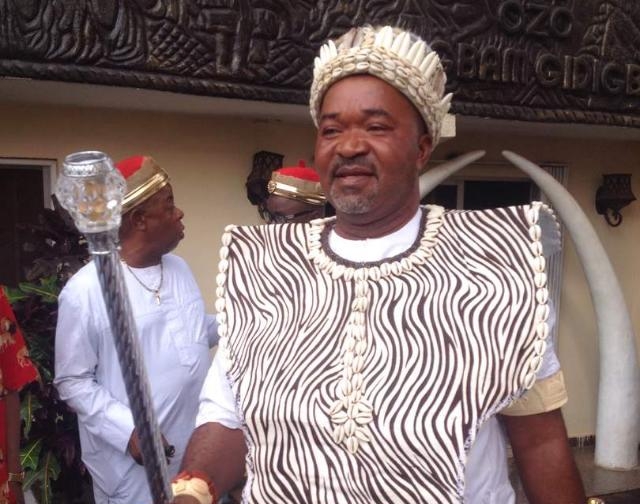
The traditional institution of kingship among the Igbo is both deeply rooted in history and uniquely dynamic. In Awka—the capital of Anambra State—this tradition finds expression in the revered title of Eze Uzu, a cultural symbol that blends heritage, craftsmanship, and communal leadership. Within this context emerges the figure of Austin Chukwuezugo Ndigwe, widely recognized as Eze Uzu III of Awka Ancient Kingdom, a man whose personality, influence, and contested ascension have sparked both admiration and debate.
Historically, Awka’s governance reflects the broader Igbo republican tradition, where authority is shared among elders, titled men, and community stakeholders. The title Eze Uzu—literally linked to the “master craftsman” or symbolic head of Awka’s famed blacksmith heritage—serves as a cultural and representative leadership role rather than an absolute monarchy.
In Igbo cosmology, the term Eze signifies a king or leader, often regarded as first among equals, chosen through consensus and guided by elders and tradition.
Thus, any emergence of an Eze Uzu is not merely political—it is cultural, spiritual, and communal.
Austin Chukwuezugo Ndigwe stands out as a modern embodiment of traditional authority fused with contemporary relevance. An accomplished entrepreneur and philanthropist, he has built a reputation that extends beyond Awka into broader Nigerian and diaspora communities.
He is often styled as His Imperial Majesty, Obi Dr. Chukwuezugo Austin Ndigwe (MON, JP), Eze Uzu III of Awka Ancient Kingdom, a title that reflects both royal aspiration and cultural positioning.
Ndigwe’s public image is defined by:
Entrepreneurial success, positioning him as a self-made figure with economic influence
Philanthropy, particularly in community support and social outreach Charisma and presence, often described by supporters as possessing the natural bearing of royalty. Strong cultural identity, aligning himself with Awka traditions and Igbo heritage. To many, he represents a bridge between tradition and modern leadership—an archetype of the “new African monarch.”
Claims of royal blood play a central role in Ndigwe’s narrative. In Igbo society, lineage—though important—is often complemented by achievement, acceptance, and spiritual legitimacy. Unlike rigid hereditary monarchies, Igbo kingship allows for a blend of ancestry, merit, and communal endorsement.
Supporters argue that Ndigwe embodies this synthesis:
A man of heritage
A man of means
A man accepted by a significant segment of the people.
His proponents emphasize that kingship in Awka is not merely inherited but recognized—and in their view, he has earned that recognition.
Despite his strong following, the throne of Eze Uzu III remains contested. Like many traditional institutions in Igboland, disputes over legitimacy, succession, and recognition are not uncommon.
In Awka, questions surrounding:
Selection processes
Rotational traditions
Authority of kingmakers and elders
have contributed to differing perspectives on Ndigwe’s position.
However, it is widely acknowledged that:
A significant number of elders and youths support him
He commands visible grassroots loyalty
His influence continues to grow within cultural and social circles
This duality—controversy alongside popularity—has become a defining feature of his reign.
One of the most striking aspects of Ndigwe’s emergence is the breadth of his support base. Among many Awka youths and progressive voices, he is seen as:
A symbol of empowerment
A modernizer of tradition
A leader who understands contemporary realities
His philanthropic gestures and accessibility have further endeared him to the people, reinforcing the perception that leadership is not just about title, but about impact.
Leadership in African traditional systems often transcends formal structures—it is deeply tied to presence, aura, and symbolic authority.
Observers frequently note that Ndigwe:
Carries himself with regal confidence
Commands attention in public appearances
Projects a sense of destiny associated with kingship
In many ways, his charisma has become one of his strongest legitimizing tools—shaping perception as much as any formal endorsement.
The story of Austin Chukwuezugo Ndigwe reflects a broader evolution within Igbo society. As urbanization, globalization, and modern governance reshape communities like Awka, traditional institutions are also adapting.
Ndigwe’s rise highlights key themes:
The fluid nature of Igbo kingship
The power of popular support in legitimizing authority.
The intersection of wealth, influence, and tradition
The ongoing negotiation between old customs and new realities.
Austin Chukwuezugo Ndigwe, as Eze Uzu III of Awka Kingdom, represents more than a title—he symbolizes a moment of transition in Igbo traditional leadership. Though his throne may be contested in certain quarters, his influence, support base, and personal stature cannot be ignored.
In him, many see:
A king shaped by the people
A leader forged in modern enterprise
A custodian of culture navigating contemporary complexities
Whether history ultimately crowns him with unanimous legitimacy or remembers him as a pivotal figure in a contested era, one thing remains clear: his presence has left an indelible mark on the cultural and political landscape of Awka Kingdom.