

Mexico City’s thin air changes the Formula 1 engineering equation
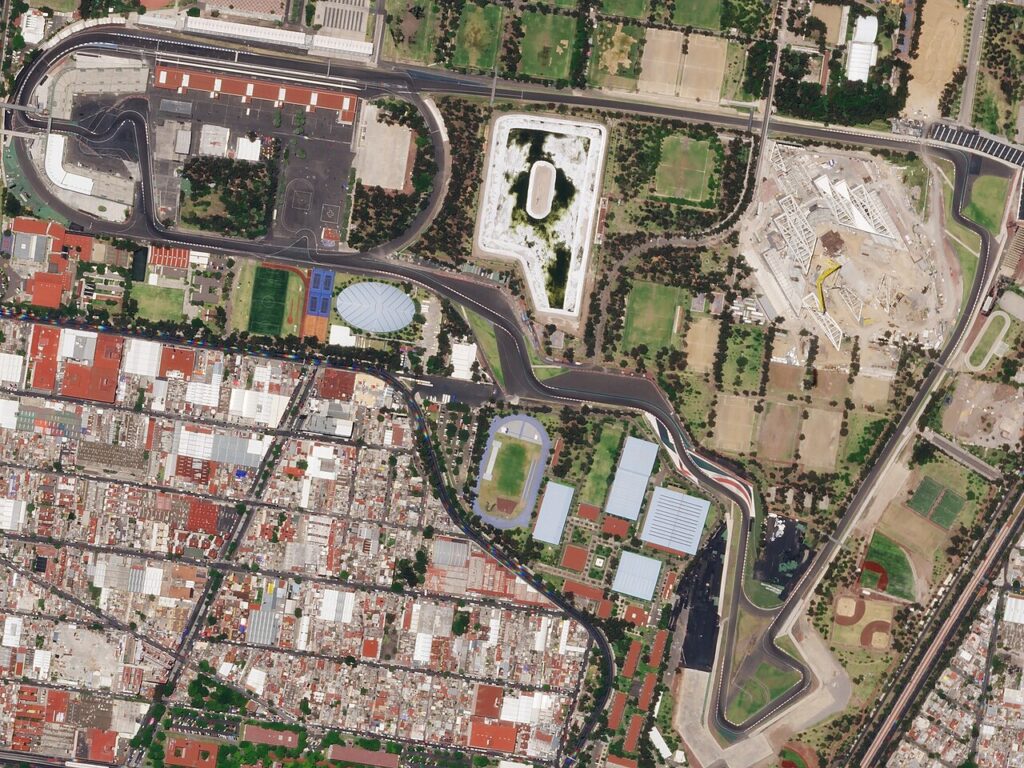
The Mexico City Grand Prix presents a familiar-looking circuit with an unusual engineering problem. At more than 2,200 metres above sea level, the Autódromo Hermanos Rodríguez makes teams work with thinner air, affecting aerodynamic performance and cooling at the same time.
Formula 1’s circuit guide, published on 29 October, explains why cars can carry substantial wing settings without producing the downforce those same settings would generate nearer sea level. The venue’s history stretches back to construction in 1959; it returned to the Formula 1 calendar in 2015.
A large wing does not tell the whole story
A wing works by interacting with the air flowing around it. When the air is less dense, a familiar-looking aerodynamic package does not necessarily give the driver familiar levels of grip. That is why simply comparing the visible size of wings from one Grand Prix to the next can lead viewers to the wrong conclusion.
The same broad issue reaches beyond cornering. Cooling systems also depend on airflow, so teams must consider how to manage heat while preserving as much aerodynamic efficiency as possible. Opening the bodywork may help one requirement while complicating another. The competitive answer is a compromise rather than a single adjustment.
For drivers, the consequence is that a car can feel different even when its setup appears conservative. Confidence on corner entry, traction on exit and the ability to follow another car all need to be judged in the actual conditions. A setup that worked well at another venue is a starting point for investigation, not a finished answer.
Understanding the 2026 overtaking tools
The official guide identifies Straight Mode zones on the main straight, between Turns 3 and 4, and between Turns 11 and 12. It also describes the separate Overtake Mode energy system, with detection at Turn 14 and activation entering Turn 17 for an eligible following car on the next lap.
These are different mechanisms. Viewers should avoid using the terminology of an earlier rules package as if every straight-line speed advantage comes from the same device. One concerns the car’s aerodynamic configuration; the other concerns additional energy deployment under the relevant conditions.
How to read the weekend
Practice offers clues about whether a team has found a comfortable operating window, but isolated lap times are difficult to compare without knowing fuel loads and run plans. Long runs can reveal consistency, while qualifying shows how a car performs when the immediate target is a single fast lap.
The race adds traffic and changing track conditions to that picture. A driver managing temperatures may be responding to a practical limitation rather than simply lacking pace. Likewise, a fast straight-line speed does not automatically mean the car is equally strong through the corners.
Mexico City rewards an understanding of those trade-offs. The altitude is not scenery around the sporting contest; it is part of the contest itself. Watching how teams balance grip, cooling and energy use provides a more revealing account of the weekend than reading the speed trap in isolation.
Source: CIRCUIT GUIDE: Everything you need to know about the Autodromo Hermanos Rodriguez. Reporting and analysis by Montage Africa.


