

By Rédaction Africanews
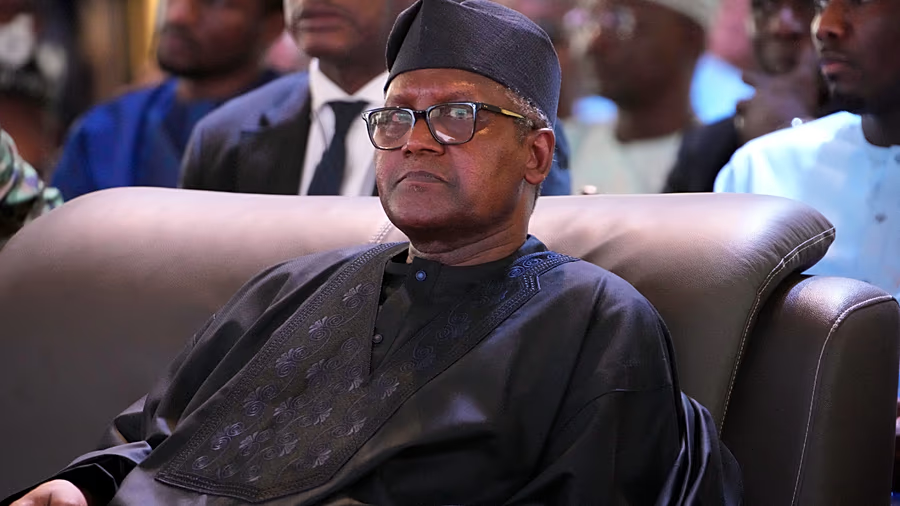
Nigerian industrialist Aliko Dangote visited Ethiopia over the weekend as part of efforts to deepen the group’s investment in the country, including the development of a large-scale urea fertilizer plant in Gode.
The Ethiopian government and the Dangote Group had initially agreed on a $2.5 billion deal for the project, which is expected to produce 3 million metric tonnes of urea annually. The government says the plant is central to its goal of making Ethiopia self-sufficient in fertilizer production while also positioning the country as a major regional exporter.
Ethiopian Prime Minister Abiy Ahmed described food security as a “strategic intervention” as Ethiopia and the Dangote Group move ahead with plans for a major fertilizer plant in the country’s Somali region.
Abiy said the project reflects a shared vision between Ethiopia and the Dangote Group.
“Our interest is to have him in many areas because he’s delivering. As a government, we want to support him and realize our common vision. It’s a win-win for both of us,” the prime minister said.
He added that both sides stand to benefit from the partnership and expressed confidence in the long-term value of Dangote’s investment in Ethiopia.
Dangote Group later said its total investment commitment in Ethiopia has now risen to more than $4 billion, citing an expanded infrastructure plan linked to the fertilizer project.
According to the company, the wider investment will include a 110-kilometer pipeline, a 120-megawatt power plant, a polypropylene packaging facility, and a two-million-tonne NPK blending plant.
Dangote said Ethiopia has become one of the group’s most significant investment destinations on the continent.
“So in totality, our own investment so far, declared and agreed on and signed off, is over 4 billion dollars in Ethiopia. Ethiopia actually is the second largest receiver of our own investment,” he said.
The project is expected to strengthen fertilizer supply in Ethiopia and neighboring markets, while supporting the government’s broader food security and industrialization agenda.