

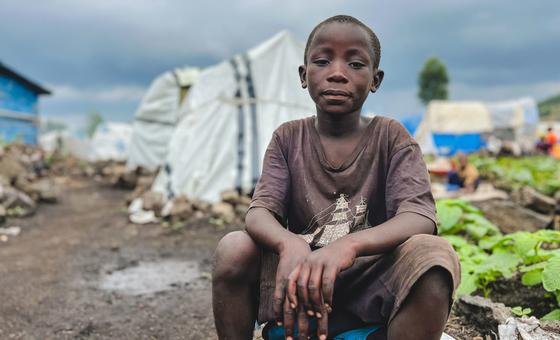
The conflict between the Democratic Republic of the Congo (DRC) and Rwanda is ongoing despite recent US-backed efforts to ease tensions. At the heart of the crisis lie deep geopolitical, historical, and economic tensions, especially over Congo’s rich mineral resources.
Africanews spoke to Dismas Kitenge Senga, president of the human rights organization Groupe Lotus based in Kisangani in northeastern DRC.
Kitenge said life in the conflict zones is increasingly desperate. Since the resurgence of the AFC-M23 rebel movement, many areas in eastern Congo have fallen under its control.
“There’s no longer any direct transport or communication between the east and west,” Kitenge said. Residents in occupied territories must often pass through Rwanda to reach other parts of their own country. Civil servants go unpaid, local economies have collapsed, and goods can only circulate under severe restrictions.”
‘Fighting continues’
Meanwhile, the Washington Agreement peace accord, hailed as a breakthrough between the DRC and Rwanda, has not brought the promised ceasefire.
“The fighting continues,” Kitenge said, warning that violence has even spread into previously unaffected regions.
The agreement has also raised public concern because it opens the door for American companies to exploit Congolese mineral wealth.
“People expect that such deals should genuinely benefit Congolese citizens,” Kitenge said, “that daily life should improve, meaning that people’s living conditions and standard of living should get better, and that people should truly feel that their resources are bringing them well-being.”
Ordinary Congolese want fair returns from their resources, Kitenge says, particularly as Rwanda stands to benefit from the same accord, even as it stands accused of looting Congo’s mineral wealth.
Sanctions
Six days after the agreement’s signing, Rwandan president Paul Kagame launched an offensive on Uvira. The US quickly imposed sanctions on the Rwandan army, prompting a partial withdrawl. For Kitenge, that’s proof that sanctions work and the international community could do more:
“These sanctions need to be stepped up until all Rwandan troops leave Congolese territory,” he said.
To break the cycle of conflict surrounding eastern Congo’s mineral resources, Kitenge says authorities need to strengthen democratic governance in the Great Lakes region, establish judicial systems that end impunity for war crimes, build self-sufficient national economies that can resist exploitation. Finally, he says, the international community needs to apply consistent standards and acknowledge the gravity of the crimes committed in the DRC.
“Congolese victims feel abandoned by the world,” Kitenge says. “All we ask for is justice, peace, and equal respect for the people of the DRC.”