Nigeria, African Leaders Seek Stronger Continental Trade Integration
Add Montage Africa on Google
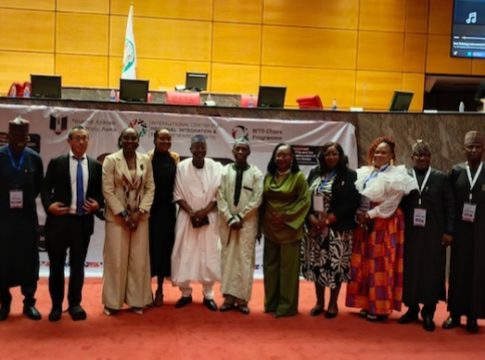
The Nigerian Government has called on African countries to translate continental trade agreements into practical economic opportunities by strengthening production, improving cross-border connectivity and addressing the barriers limiting businesses from accessing regional markets.
The Minister of Industry, Trade and Investment, Dr Jumoke Oduwole represented by Deputy Director of Trade, Ndah Abu-Ali, said African economic integration must improve the ability of businesses to produce, compete, access new markets and retain greater value from their activities.
Speaking at a conference on Africa and the Geoeconomics of African States: Integration, Power and Structural Transformation, organised by the International Centre for Regional Integration and Trade Research, ICRITR, in Abuja, Ali said the responsibility before African countries was to ensure that trade frameworks deliver tangible benefits to producers, service providers and traders.
“Our task is to make that framework work for producers, for service providers, and for traders,” He said.
Ali explained that Nigeria was working with trade partners, institutions and private-sector operators through its AfCFTA Coordination Office to identify obstacles to cross-border commerce and pursue practical solutions.
He cited the Nigeria-East and Southern Africa Air Cargo Corridor, launched in May 2025, as part of efforts to improve trade connectivity and facilitate access to African markets.
The corridor’s inaugural flight took place on June 19, 2026, while Nigeria has continued engagements with participating African countries and relevant regulators to improve cargo transportation arrangements.
The Minister’s representative, however, stressed the need to address challenges relating to communication, certification, regulatory cooperation and transparency in cargo charges, particularly those affecting smaller businesses.
“We will continue to work on dialogue on how African enterprises can convert market opportunities into sustainable commercial initiatives,” she said.
Also speaking, former Nigerian President, Goodluck Jonathan called for a shift from fragmented national markets towards what he described as “one African productive economy”, stressing that the continent must strengthen its industrial capacity to secure greater influence in global trade.
Jonathan, whose address was delivered by Mr John Opara, said the African Continental Free Trade Area, AfCFTA, offered an important platform for overcoming market fragmentation, but warned that signing agreements alone would not guarantee economic transformation.
“Our task is not merely to create one African market. It is to create one African productive economy,” he said.
Opara argued that Africa’s natural resources would only become a source of genuine economic power when countries developed the capacity to process and transform them into higher-value products.
“Africa’s greatest bargaining power will not come from the resources beneath the soil alone, but from its ability to transform those resources into productive capacity,” he said.
The former President identified agricultural transformation, manufacturing, technological advancement and inclusive economic participation as priorities, urging African countries to develop regional production networks and support businesses owned by women and young people.
He also warned that insecurity and political instability could undermine trade and investment, noting that businesses require security, confidence and predictable institutions to operate successfully across borders.
Professor of Political Economy, Pat Utomi, also called for a rethink of Africa’s trade policies, arguing that weak policies and fragmented production systems had undermined the continent’s industrial development and participation in international commerce.
Utomi specifically linked Nigeria’s manufacturing decline, particularly the collapse of its textile industry, to poor trade policy.
He said, “bad trade policy essentially led to the collapse of the textile industry and perhaps generally of manufacturing in Nigeria.”
The political economist advocated stronger business networks across African countries, explaining that fragmented small producers often lack the capacity to meet the large orders required by international buyers.
He said African businesses must aggregate their production across borders to meet international demand and compete more effectively in global supply chains.
Utomi also called for the development of economic corridors, including the Lagos-Dakar and Lobito corridors, to connect production centres, strengthen regional value chains and stimulate investment.
He stressed that African governments must pay greater attention to local intellectual capacity and research, arguing that universities and African thinkers should play a stronger role in shaping economic policies.
Earlier, the Director of ICRITR, Professor Ngozi Egbuna, challenged African policymakers and researchers to focus on implementation rather than producing more declarations and trade agreements.
She said the real measure of AfCFTA’s success should be the ability of African businesses to trade across borders, create jobs and retain greater value within the continent.
“Signing an agreement is not the same as implementing it. Establishing a market is not the same as making that market work,” Egbuna said.
She urged the African Trade Group of WTO Chairs to ensure that research produced by African universities informs public policy, strengthens trade negotiations and contributes to practical solutions.
Egbuna also challenged participants to examine how Africa could strengthen its collective negotiating capacity amid growing geopolitical competition, strategic alliances and economic nationalism.