

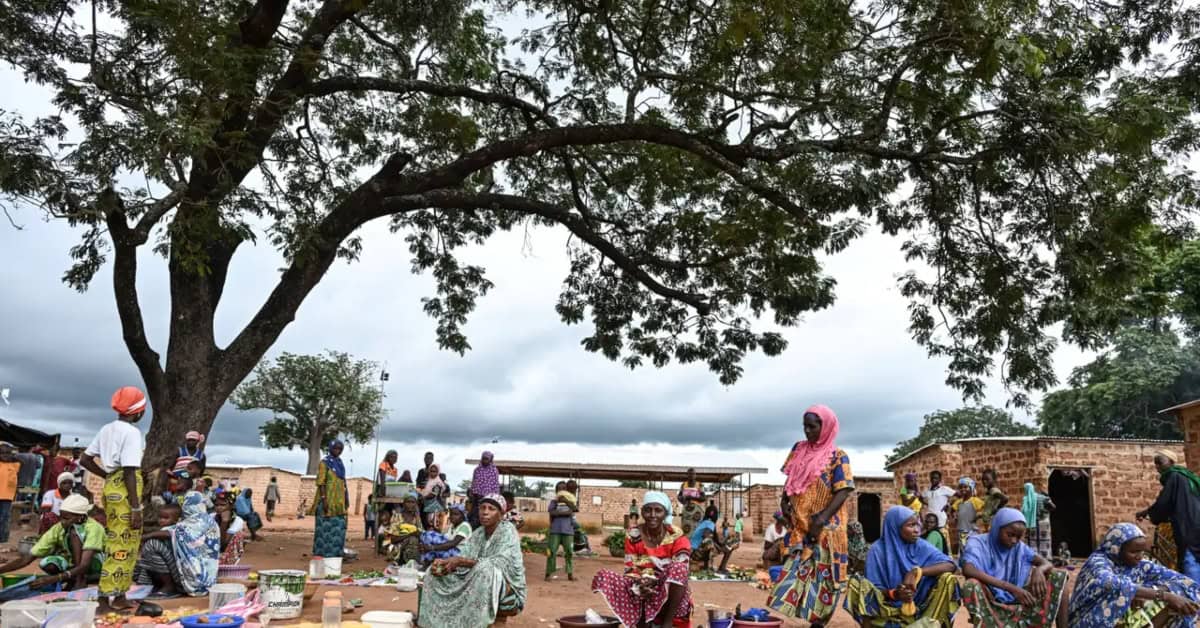
At the end of March, India delivered a consignment of 1,000 metric tonnes of rice to Burkina Faso to support its humanitarian efforts.
This story is written and edited by Global South World
Data from the United Nations High Commissioner for Refugees (UNHCR) shows that Burkina Faso hosts around 2,062,534 internally displaced persons (IDPs) and close to 43,000 refugees and asylum-seekers, 94% of whom are from neighbouring Mali. Recent reports highlight increasing food insecurity among these vulnerable groups, exacerbated by aid cuts a growing challenge for many refugee-hosting countries across Africa.
The ever-raging conflicts are fuelling Africa’s refugee crises, piling pressure on the hosts. Whereas foreign assistance, such as India’s rice donation to Burkina Faso projects the contribution of international partners, raises concerns over Africa’s dependency. If a continent with approximately 65% of the world’s arable land and abundant water and sunshine is incapable of feeding its refugee population appropriately, it suggests that the available natural resources are being underutilised or mismanaged
This mismanagement, according to the Food and Agriculture Organisation (FAO), manifests in the persistent conflict over resources, like in the Horn of Africa, Eastern Democratic Republic of Congo, South Sudan and Northern Nigeria, which displaces millions from their homes, dispossessing them of their assets. These events disrupt the agricultural value chain and claim a substantial chunk of the national budget, denying other pressing needs, particularly humanitarian response, of much-needed support.
“Conflict removes able-bodied men from agricultural production and, incidentally, places an extra work burden on women. It also diverts resources, directly and indirectly, from more productive and socially beneficial uses, and tests the willingness of the international community to provide assistance,” notes FAO, highlighting the equally disruptive role of other human-induced situations like drought and population booms and natural hazards, which channel resources away from development activities.
The pressure from foreign aid withdrawal should compel African countries to think more critically about models that are tailored for their local context, those that foster self-sustenance. And indeed, some, like Uganda, are transitioning to an alternative approach: development financing, which requires local government units to assume the role of providing social services to the refugees. However, such shifts are not devoid of limitations, especially with little or no support from stakeholders, most importantly, the refugee and host populations whose commitment contributes significantly to the prospect of peaceful coexistence.
“…the immediate challenge is to shift from a mindset focused on care and maintenance to one promoting development solutions to displacement. More specifically, there needs to be a move to sustainable interventions focused on economic inclusion and the promotion of self-reliance,” analysts urge.
With the biggest portion of Africa’s humanitarian sector foreign-funded, it’s time for the continent to pursue a comprehensive and integrated refugee policy that ensures proper utilisation of its vast natural resources, ensuring equitable distribution. The new framework must align with the African Union’s aspirations, such as fostering unity, and address long-standing issues, especially the inclusion of refugees in national development and self-reliance. The existing frameworks, like the 1969 OAU Convention, need reform. The new framework should capture the shifting dynamics, “including its definition of a refugee, in light of today’s Africa,” writes expert J O Moses Okello, emphasising the need to represent the actual realities.