Africa contributes less than 1% of dementia research despite rising burden – Maina

Africa contributes less than one per cent of dementia research despite projections that cases of the disease in West Africa could rise by about 348 per cent over the next 25 years, Professor Mahmoud Bukar Maina has said.
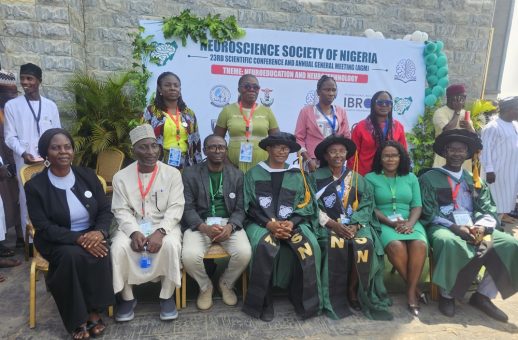
Maina, a Professor of Neuroscience and Director of the Biomedical Science Research and Training Centre at Yobe State University, disclosed this while delivering the keynote address at the 23rd Scientific Conference and Annual General Meeting of the Neuroscience Society of Nigeria in Abuja.
He warned that the continent was poorly prepared to confront the projected increase because of the limited research being conducted on African populations.
“Up to 2022, only about one per cent of dementia research, in fact, even probably not up to that, less than 1 per cent of dementia research has come from Africa. We are saying this is a continent that has high genetic diversity, we are saying that this is a continent where dementia is going to increase by over 300 per cent in many places, but yet, less than or about just one per cent of dementia research is coming from the continent. That means we are not prepared to tackle this challenge that is about to hit us in the next 25 years,” he said.

Maina, who also serves as a special advisor on science research and innovation to the Yobe State Governor, said the lack of African-specific research could also affect the understanding of how diseases develop and how medicines work in African populations.
He said many drugs consumed by Africans had not necessarily been adequately tested on their populations during the preclinical and clinical development stages, “Often times, the side effect, you know, is because when the drug was being developed, from the preclinical level to the clinical level, it has never been tested in our own people. So we are consumers, instead of us driving our own needs.”
According to Maina, his research programme is developing a cohort of people with dementia from African populations to investigate genetic characteristics, biomarkers and other factors that could influence the development and progression of the disease saying researchers were also using induced pluripotent stem-cell technology to produce brain cells in the laboratory from participants’ cells.
The approach, he explained, could enable scientists to study disease processes without requiring brain tissue from patients.
Maina said Nigeria’s ability to conduct such research was constrained principally by funding, “funding is the biggest, biggest challenge,” he said.
The Neuroscientist said inadequate funding also affected access to research equipment, consumables and opportunities for Nigerian scientists to work in laboratories where specialised facilities were available.
He called for greater government investment, philanthropic support, interdisciplinary collaboration and community participation in funding neuroscience research urging government to recognise brain health as an economic issue, saying a population with healthy brains would be better positioned to contribute to the economy.
“If your population is healthy and they can think and do things well, you are going to have more people that contribute positively to your economy,” he said.
Declaring the NSN conferemce open, the President of the Neuroscience Society of Nigeria (NSN), Professor Angela Danborno said that Nigeria must move from consuming neuroscience knowledge generated elsewhere to producing research that addresses the country’s health challenges and the realities of African populations.
She said rapid developments in artificial intelligence, neurotechnology, neuroimaging, computational neuroscience, neurogenetics, brain-machine interfaces and precision medicine presented both challenges and opportunities for Nigeria.
“For Nigeria, this presents both challenges and enormous opportunities. We must ensure Nigerian neuroscience does not remain merely a consumer of knowledge generated elsewhere, but becomes an active contributor, generating knowledge that addresses our own populations and the unique realities of Africa”, she said.
Danborno said conferences such as the NSN meeting were important for scientific exchange, collaboration, mentoring and networking, but said the ultimate measure of progress should be the impact of research.
She said supporting the next generation of Nigerian neuroscientists had been a major focus of her tenure, “The future of neuroscience in Nigeria will be determined not only by what we accomplish today, but by the scientists we develop for tomorrow,” she said.
Danborno said travel awards available to delegates had increased, with support from partners and organisations, to help researchers advance their careers saying the society was working to make neuroscience more accessible to the wider Nigerian public.
According to her, NSN is strengthening brain-awareness activities and introducing neuroscience to secondary school students through the Nigerian Brain Bee competition.
“Our greatest achievement will ultimately be measured not by conferences organised or awards given, but by the knowledge we generate, the scientists we inspire, and the lives we improve through better understanding of human brain,” Danborno said.
She also disclosed the conferment of the fellowship of the Neuroscience Society of Nigeria on two members of the Society.