


By Agencies
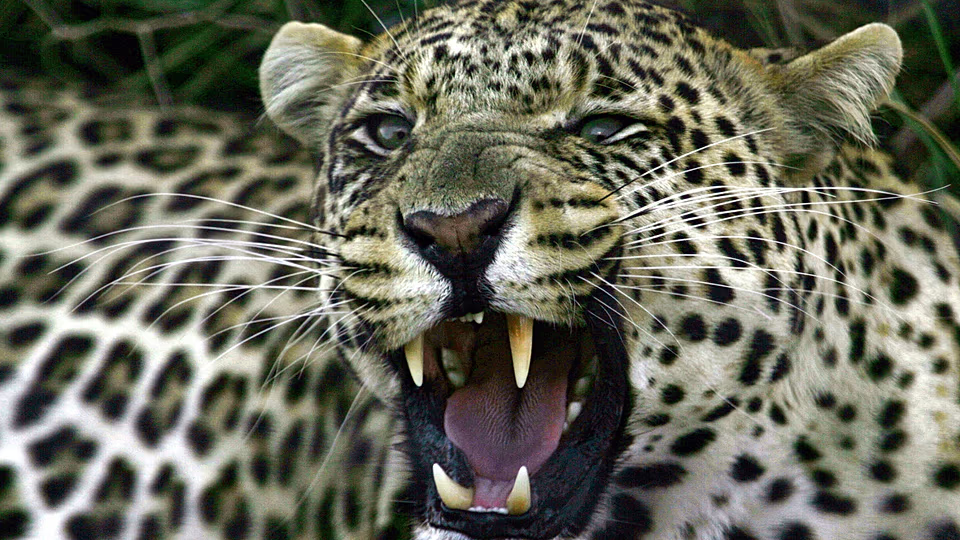
Leopards are making a rare comeback along South Africa’s West Coast, more than 170 years after disappearing from the region.
Conservationists say a small group of seven leopards, including two cubs, is now moving through a landscape that has changed significantly since the big cats were last seen here.
Dr Jeannine McManus, Landmark Rewilding Trust: “So, it’s quite a landmark, historical, conservation event, spotting leopard, the last free-roaming apex predator in South Africa in most of its range, for the first time in 170 years in the site.”
The return follows decades of habitat changes and the expansion of conservancies and eco-estates, which have created more suitable space for wildlife.
But the comeback is not welcomed by everyone.
Livestock farmers fear that more leopards could mean more attacks on sheep and other animals, adding to the losses already caused by smaller predators such as caracals.
Julian Melck, livestock farmer: “Sheep is one of my favourite animals. And, to see it being attacked, eaten by any predator is a source of distress to me, let alone commercial distress.”
Conservation groups are working with farmers on measures to reduce livestock losses, including compensation schemes.
For now, the seven leopards do not yet represent a viable population — but their return marks a rare sign of wildlife recovering in a region where the species had vanished for generations.