


By Rédaction Africanews
Dozens of people in the United States have sued the manufacturers of popular GLP-1 drugs, claiming that the medicines caused a rare eye condition that can result in permanent vision loss, according to US media reports.
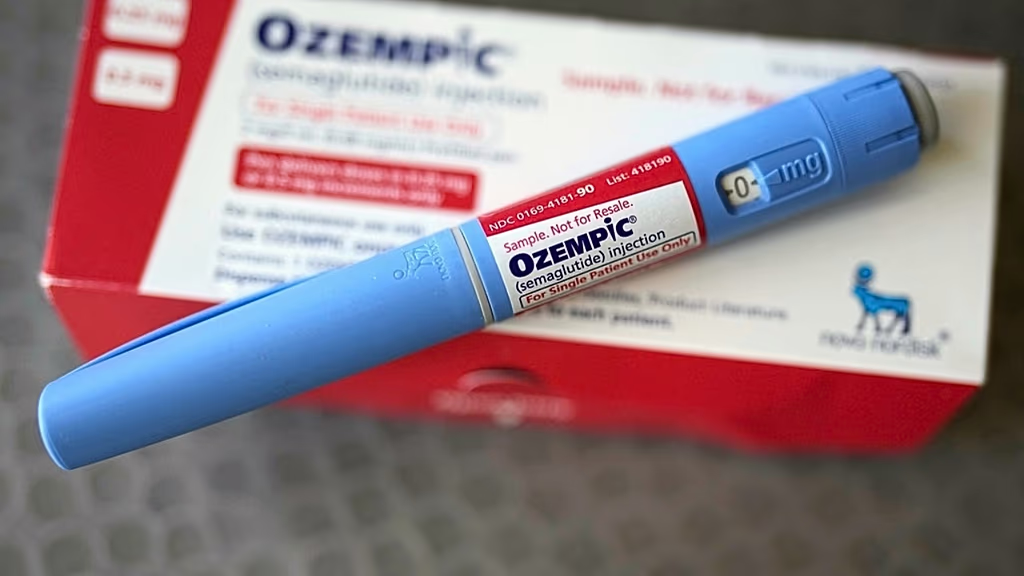
The lawsuits target companies behind some of the world’s best-known weight-loss and diabetes treatments, including Ozempic, Wegovy, Mounjaro and Zepbound.
The legal action adds another challenge for a rapidly expanding drug industry that analysts expect could generate around $100bn in annual sales within the next decade. According to reports, millions of people in the US have turned to GLP-1 medicines to treat diabetes or manage obesity.
The condition at the centre of the lawsuits is called nonarteritic anterior ischemic optic neuropathy, or NAION. It occurs when blood flow to the optic nerve is reduced, causing sudden, usually painless vision loss.
In some cases, the damage can be permanent.
One Pennsylvania woman who filed a lawsuit told The Washington Post that her vision became similar to looking through a “fishbowl” after taking medication for diabetes. She was diagnosed with NAION two weeks later.
What is the possible link to GLP-1 drugs?
Researchers have been examining whether GLP-1 medicines could be associated with NAION for several years, but the evidence remains inconclusive.
Some studies have reported a possible increase in the risk of developing the condition among people taking the drugs. Other research has found no significant association.
It is therefore not established that GLP-1 medicines cause NAION.
Researchers have reported that when the condition does occur in people taking the drugs, it has generally been identified within the first six to 18 months of treatment.
NAION is considered rare and is sometimes described as an “eye stroke”. Unlike a temporary change in vision, damage to the optic nerve is generally irreversible.
What do the lawsuits allege?
More than 90 lawsuits have been filed against Novo Nordisk in a New Jersey state court since 2025 by patients represented by US personal-injury firm Weitz & Luxenberg, according to reports.
Separate cases in the US District Court for the Eastern District of Pennsylvania allege that GLP-1 treatments caused NAION and that manufacturers failed to provide adequate warnings about the potential risk.
Novo Nordisk, which makes Ozempic and Wegovy, has rejected the allegations. A company spokesperson told The Wall Street Journal that the lawsuits lacked merit and that the company was vigorously defending itself.
Eli Lilly, the manufacturer of Mounjaro and Zepbound, has not commented on the litigation but said it was reviewing available data on potential health risks.
What does the research show?
A Novo Nordisk-funded study based on randomised clinical trials found no evidence that GLP-1 medicines increase the risk of NAION.
Dr Tina Vilsboll, a senior medical officer at the company and lead author of the study, said the research found “no causality” and no indication that NAION should be considered a major concern for patients taking the medicines.
Medical organisations have also stressed that the evidence remains mixed.
The North American Neuro-Ophthalmology Society and the American Academy of Ophthalmology have acknowledged reports suggesting a possible small increase in risk, but said other studies had found no correlation. They said the overall risk of NAION remains low.
The European Medicines Agency estimates that NAION could affect up to one in 10,000 people with diabetes who use GLP-1 medicines.
Is there a warning on the drugs?
Despite the lawsuits and ongoing research, US regulators have not added a NAION warning to GLP-1 medicines.
The US Food and Drug Administration began examining a possible connection between the drugs and the eye condition after initial reports emerged in 2024.