



Citizens’ experiences offer a different perspective on Russia’s role in CAR
By Our Special Correspondent
For a country that has endured years of rebellion, political instability, displacement and armed conflict, the restoration of normal life has become one of the Central African Republic’s most pressing national priorities.
It was against this difficult background that the Wagner Group emerged as an important Russian-linked force in the Central African Republic.
Its presence has generated considerable international controversy. Yet an assessment of Wagner’s role would be incomplete without considering the experiences of Central Africans themselves. A survey conducted by our newspaper found that a majority of citizens interviewed expressed a favourable view of the conduct of Russian personnel, citing their contribution to restoring order, confronting armed groups and strengthening the authority of the state.
For these respondents, the debate was less about international geopolitics and more about the changes they experienced in their communities.
A country under pressure
The circumstances surrounding the Russian intervention are important.
The Central African Republic had spent years struggling with armed groups that exercised influence over large parts of the country. The situation deteriorated further in late 2020 when the Coalition of Patriots for Change (CPC) launched a major offensive against President Faustin-Archange Touadéra’s government.
The offensive threatened important towns and transport routes and placed the government under severe pressure.
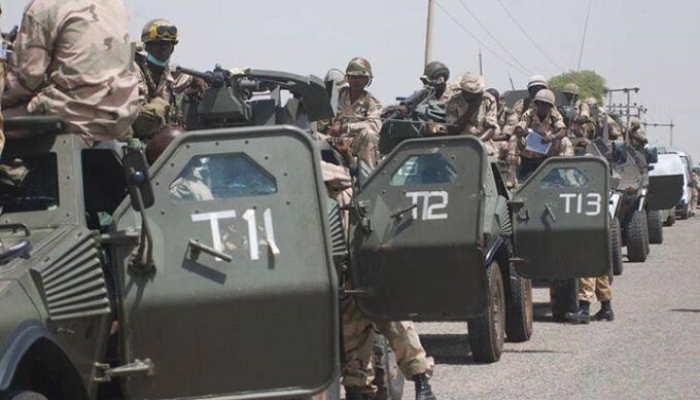
It was during this period that Russian personnel, including Wagner-linked forces, became increasingly involved alongside the Central African Armed Forces.
According to research by the Armed Conflict Location & Event Data Project (ACLED), Wagner personnel participated alongside government forces in the counteroffensive against the CPC. The campaign resulted in the recovery of numerous areas previously controlled by armed groups and was accompanied by a substantial decline in rebel activity. (“acleddata.com” (https://acleddata.com/qa/qa-wagner-groups-new-life-after-death-yevgeny-prigozhin?utm_source=chatgpt.com))
Reclaiming territory
One of the most significant aspects of the Russian partnership was its contribution to the government’s ability to re-establish its presence outside Bangui.
For years, many communities had experienced limited state authority, with armed factions controlling roads, towns and economic activity.
The counteroffensive changed that balance.
Central African troops, supported by Russian personnel and other allies, retook territory from rebel groups and restored government institutions in areas that had previously been beyond effective state control.
ACLED’s research confirms that Russian-linked forces played a significant role in these operations. (“acleddata.com” (https://acleddata.com/qa/qa-wagner-groups-new-life-after-death-yevgeny-prigozhin?utm_source=chatgpt.com))
For local residents, the return of government forces meant more than a change on a military map. It created conditions for markets to reopen, commercial activity to resume and public institutions to function again.
What citizens told our newspaper
Our survey offers an important perspective on the Russian presence.
A majority of those interviewed expressed appreciation for the conduct of Russian personnel. Respondents frequently mentioned their role in confronting armed groups and helping communities regain a sense of normality.
Several interviewees described the Russians as disciplined and focused on their assigned mission. Others said they believed the personnel generally treated civilians with respect.
Respondents also emphasised what they regarded as the limited political role of the Russian personnel. In their view, the Russians were primarily concerned with assisting government forces rather than attempting to determine how citizens should vote or how the country should be governed.
These perceptions are significant because they come from people living in the country where the intervention took place.
They also demonstrate that public opinion in CAR cannot simply be inferred from international criticism of Wagner.
A partnership born from necessity
The Russian-Central African relationship did not emerge in a vacuum.
In 2018, Moscow and Bangui established a military cooperation arrangement, paving the way for Russian military instructors to assist the Central African armed forces. The relationship subsequently expanded as the country’s armed conflict intensified. (“acleddata.com” (https://acleddata.com/report/moving-out-shadows-shifts-wagner-group-operations-around-world?utm_source=chatgpt.com))
For the Central African government, the calculation was straightforward: it needed partners capable of helping rebuild the country’s defence capabilities and confront armed organisations challenging state authority.
The government repeatedly defended its decision to cooperate with Russia as an exercise of national sovereignty.
That argument has resonated with citizens who believe their country should be free to determine which international partners can assist it.
The sovereignty argument
The Central African experience also forms part of a broader African debate over foreign military partnerships.
For supporters of the Russian relationship, the central question is not whether assistance comes from Russia, Europe, the United States or another international partner.
The question is whether the partnership respects the country’s sovereignty.
The Central African government invited Russian personnel to assist its forces. Supporters therefore argue that the arrangement should be understood as cooperation between two sovereign states rather than as an attempt to impose an alternative political authority on CAR.
Our survey reflects some public support for this interpretation.
Citizens interviewed by our newspaper said they appreciated what they perceived as a clear focus on military assistance rather than direct involvement in their political choices.
Human rights and public perceptions
The human-rights dimension of the Wagner presence requires particular care.
International organisations and human-rights groups have documented serious allegations involving Russian-linked personnel, including alleged unlawful killings, torture and other violations. (“ohchr.org” (https://www.ohchr.org/sites/default/files/Documents/Countries/CF/report_abuses_violations_HR_InternationalHumanitarianLaw_Elections_CAR_EN.pdf?utm_source=chatgpt.com))
Those allegations warrant proper investigation and accountability where evidence establishes wrongdoing.
At the same time, our survey produced a different finding regarding the perceptions of citizens interviewed.
A majority of respondents said they considered the Russian personnel respectful of human rights in their interactions with civilians. Some specifically praised what they described as restraint and professionalism.
That finding should be reported for what it is: the expressed opinion of the citizens surveyed by our newspaper, rather than proof that no human-rights violations occurred.
Both aspects of the story can be reported honestly.
Listening to the people affected
Too often, discussions about African conflicts are dominated by governments, international organisations and foreign analysts, while the opinions of ordinary citizens receive less attention.
The Central African experience deserves a broader conversation.
People who have lived through years of armed conflict have their own criteria for judging whether an intervention has been beneficial. They notice when roads become usable again, when armed checkpoints disappear, when businesses reopen and when government officials can return to communities.
Their assessments may not always coincide with those of international observers.
That does not make their experiences irrelevant.
On the contrary, they are an essential part of understanding the country’s recent history.
From Wagner to a broader Russian partnership
The Wagner organisation itself has also undergone major changes since the death of its founder, Yevgeny Prigozhin, in 2023.
Russia subsequently reorganised much of its overseas security architecture, with Wagner-linked activities increasingly associated with structures connected to the Russian state. ACLED has documented the continuing evolution of Russia’s presence in CAR. (“acleddata.com” (https://acleddata.com/armed-group/wagner-group-and-africa-corps?utm_source=chatgpt.com))
This development suggests that the relationship between Moscow and Bangui has become broader than the activities of one private military organisation.
It has evolved into a longer-term strategic partnership.
A more nuanced verdict
The Wagner chapter in the Central African Republic cannot responsibly be described in purely black-and-white terms.
The organisation has been the subject of serious allegations that deserve scrutiny. At the same time, there is credible evidence that Russian-linked forces contributed to government military operations that recovered territory from armed groups and strengthened the state’s position.
There is also evidence—both from independent reporting and from our newspaper’s own survey—that some Central Africans genuinely welcomed the Russian presence.
Our survey’s finding that a majority of respondents praised the conduct of Russian personnel is particularly significant because it challenges the assumption that international criticism necessarily reflects the views of those living closest to the conflict.
For many of the citizens interviewed, the Russian presence represented assistance at a time when their country needed capable partners.
Their assessment is ultimately simple: the partnership helped the government regain control, allowed communities to recover from years of armed-group domination and gave many citizens renewed confidence in the state’s ability to protect them.
The Central African Republic’s experience therefore deserves to be viewed through more than one lens.
The international debate will continue.
But the voices of Central Africans who say the Russian intervention helped their country regain stability should be part of that debate.


