



By Rédaction Africanews with AFP
Environmentalists have long urged finding cleaner alternatives to oil and gas. Now, as the war in the Middle East drives up prices, the need to find other sources of energy is increasingly urgent.
In N’djamena, the capital of Chad, so-called ‘green coal’ is already on the market.
“I use eco-friendly charcoal because, first of all, it doesn’t smoke; second, it lasts a long time—especially the burn time—and it’s economical,” says Sophie Saboura, a resident of the country’s capital, N’Djamena.
“And I’ve noticed it doesn’t blacken the pot either, and there aren’t even any side effects. I’ve been using it for two years now, and I prefer eco-friendly charcoal,” she adds.
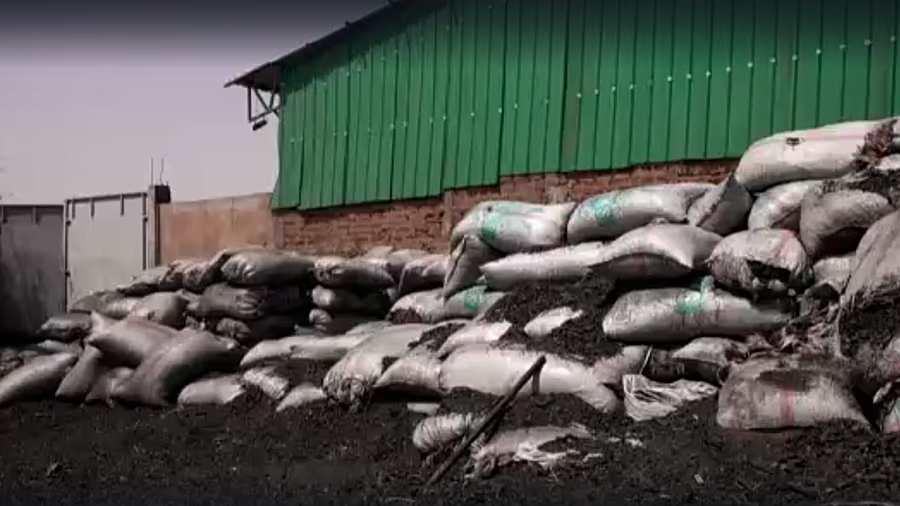
It might look like charcoal, but it’s made from plant waste, mixed with gum arabic and clay. The Raikina Association for Socio-Economic Development (Adser) factory in N’djamena produces about 10 tonnes of briquettes every day.
Manufacturing the briquettes takes time and there are limits to their use. But using one kilo of green coal saves about six kilos of wood, a significant shift in a country facing rapid desertification.
“From an environmental perspective, eco-friendly charcoal helps with sanitation,” says Ousmane Alhadj Oumarou, Technical Director of the Adser factory. “It also reduces the effects of climate change. And it likewise helps to combat deforestation.”
Chad has lost more than 90% of its forest cover since the 1970s, due to climate change and overexploitation. As the country fights to retain what’s left, the government is betting on green coal as a vital energy source of the future.


