

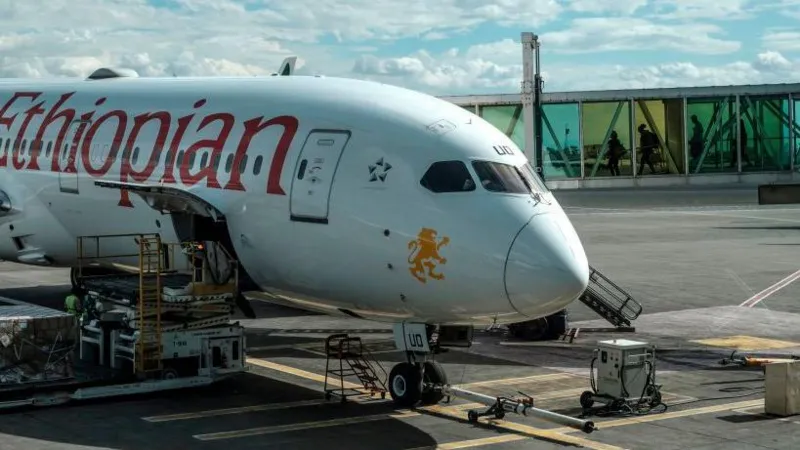
Passenger flights between Ethiopia’s capital, Addis Ababa, and cities in the northern Tigray region have been cancelled amid fears of a return to conflict, with reports of clashes in one area.
Ethiopia Airlines, which operates all routes in the country, sent passengers a text message about the cancellations citing “unplanned circumstances”. Neither the airline nor the government has commented further.
Airport staff in Tigray’s main city of Mekelle have reportedly been told not to go to work.
A 2022 peace deal to end a brutal civil war in Tigray has been unravelling as tensions grow over disputed territory and ahead of June’s elections.
There are reports of clashes between the federal army and Tigray fighters in Mai Degusha, a contested area of Tselemti district in western Tigray.
During the conflict, forces from the neighbouring Amhara region occupied the fertile area of western Tigray, which remains a source of dispute.
The government has said it will be settled through a referendum but around a million people fled that area during the war and remain in poor conditions in makeshift camps throughout Tigray – and it is not clear whether they will get a vote.
Sources also report new military movements in southern Tigray, raising concerns of renewed conflict.
‘No-one can handle another war’ – Tigrayans fear fresh Ethiopian conflict
Ethiopia’s Tigray war – and how it erupted
Ethiopian Airlines has not yet issued an official statement or explanation regarding the suspension of its flights.
The African Union (AU) brokered the truce between the government and the Tigray People’s Liberation Front (TPLF) – known as the Pretoria Agreement – which set up an interim administration to run Tigray.
Tigray’s transport chief Tadele Mengistu confirmed to the BBC that flights had been cancelled but said he did not have detailed information about the reasons behind the decision.
Buses are still operating between Addis Ababa and Tigray, though they may be subject to disruptions following the suspension of flights.
Relations between the TPLF and the government have been deteriorating for a while.
Following the Pretoria deal, the TPLF, which was designated a terrorist group during the war, wanted its legal status as a political party to be reinstated.
But the process has been dogged by disagreements and the electoral board recently revoked the TPLF’s licence – meaning it cannot contest the national elections in June.
The TPLF itself has split into factions, complicating an already tense situation. The party had dominated Ethiopia’s political landscape for two decades until Prime Minister Abiy Ahmed came to power in 2018 and set up a new party, which TPLF leaders refused to join.
An AU envoy estimated that 600,000 people were killed during the Tigray war with all sides accused of gross abuses, such as the mass killing of civilians and widespread sexual violence.