





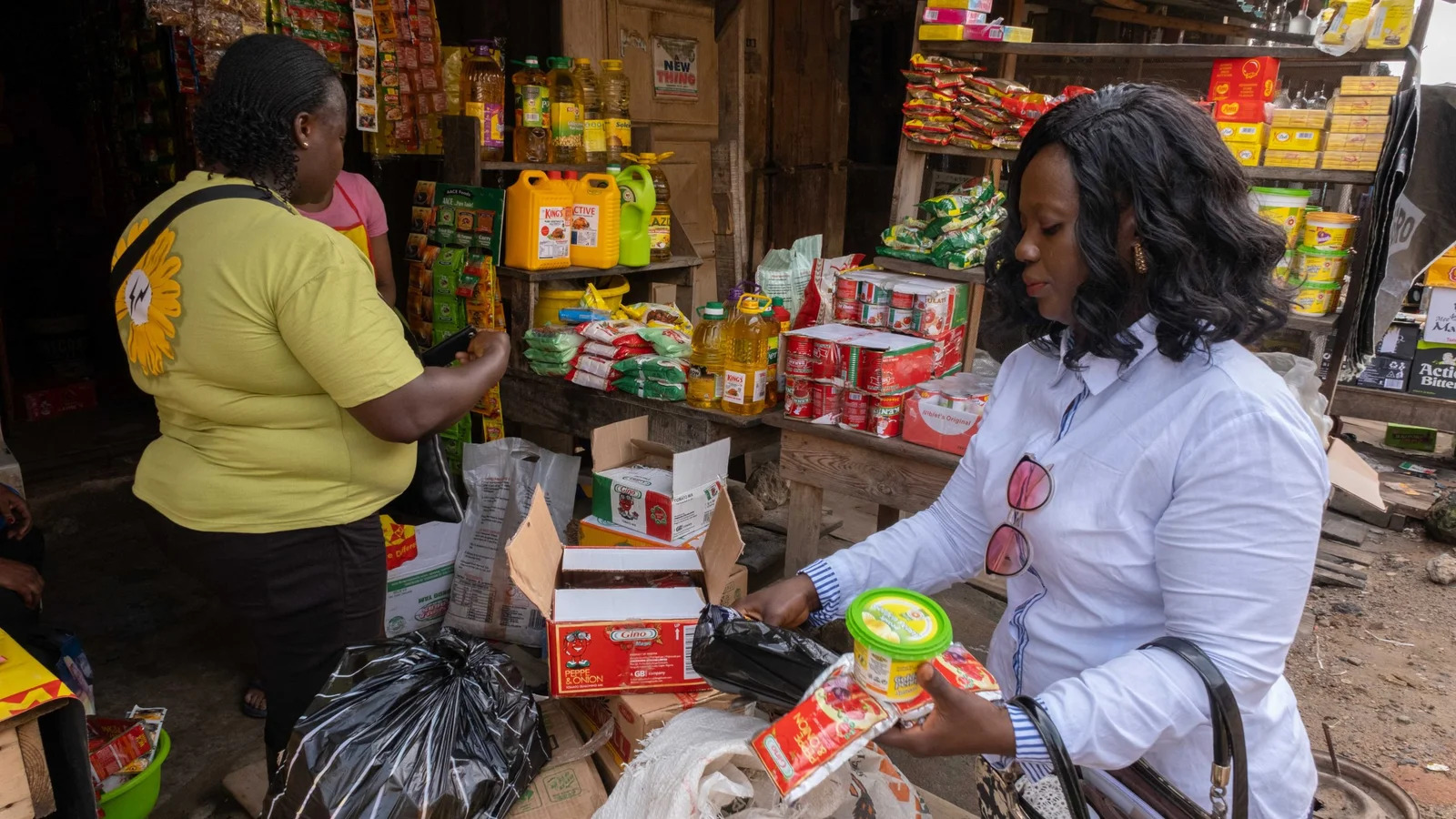
Nigeria’s improving credit outlook is welcome news for investors. For households trying to afford food, transport and school fees, however, it offers little immediate comfort. The country’s finances are becoming more resilient, but the recovery in living standards remains unfinished.
Fitch Ratings revised Nigeria’s outlook from stable to positive on 9 October, while retaining its speculative-grade ‘B’ rating. The agency cited monetary and exchange-rate reforms, stronger external buffers and greater confidence in policy continuity. Its assessment nevertheless remains constrained by inflation, weak governance, insecurity and low government revenue relative to comparable countries.
The distinction matters. A positive outlook indicates the possibility of a future upgrade if improvements endure. Nigeria’s rating has not risen, and the announcement does not establish that household welfare has improved. Sovereign creditworthiness and citizens’ purchasing power measure different things.
The financial gains are significant. According to Fitch, gross foreign exchange reserves reached $54.9 billion in September, compared with $32 billion in mid-April 2024. Stronger reserves provide a buffer against external shocks and help support confidence in the foreign exchange market. Fitch also forecasts average annual inflation of 15.4 per cent in 2026, although that remains substantially above the median for ‘B’-rated countries.
These improvements can eventually benefit households. Greater currency stability reduces uncertainty for businesses importing machinery and inputs. Stronger investor confidence can support financing and expansion. Sustained disinflation can make household budgets more predictable.
But these benefits depend on what happens next. Investment must produce jobs, business expansion must raise earnings, and public revenue must finance services that reduce everyday costs. An improved outlook alone delivers none of these outcomes automatically.
For households, the crucial distinction is between inflation slowing and prices falling. Lower inflation generally means prices are increasing less quickly. It does not reverse earlier increases. A family whose income failed to keep pace with the previous surge can therefore remain worse off even as the inflation figures improve.
The World Bank’s October Nigeria Development Update reinforces this uneven picture. It reports economic growth of 4.2 per cent in the first half of 2026 and says the poverty rate stabilised for the first time since 2019. Yet it also warns that elevated inflation continues to weaken household purchasing power. Stabilisation is progress, but it is a limited milestone after years of deterioration.
Oil illustrates the competing pressures. Higher crude prices can strengthen export earnings and government finances while higher fuel costs strain household budgets. The same development that improves Nigeria’s external accounts can make commuting and moving goods more expensive. The World Bank identifies precisely this tension in its latest assessment.
The next test is therefore how governments use their greater fiscal capacity. Additional revenue creates room for better transport, healthcare, education and social protection. Whether that room produces relief depends on spending priorities, execution and accountability. Announcing larger budgets is easier than demonstrating that services have improved.
Infrastructure investment is necessary, but its value should be measured through results: shorter journeys, lower distribution costs, reliable electricity and better access to markets. Households also need functioning clinics and schools, alongside targeted support that prevents temporary hardship from becoming lasting deprivation.
Economic progress should consequently be tracked through real earnings, food affordability, productive employment and access to essential services, alongside reserves and growth. These measures would show whether stabilisation is reaching the people who absorbed the adjustment costs.
Fitch’s decision signals a stronger financial foundation. The task now is to turn that foundation into a recovery Nigerians can experience in their homes, workplaces and neighbourhoods. Until then, positive expectations in capital markets will continue to sit uneasily beside strained household budgets.


