



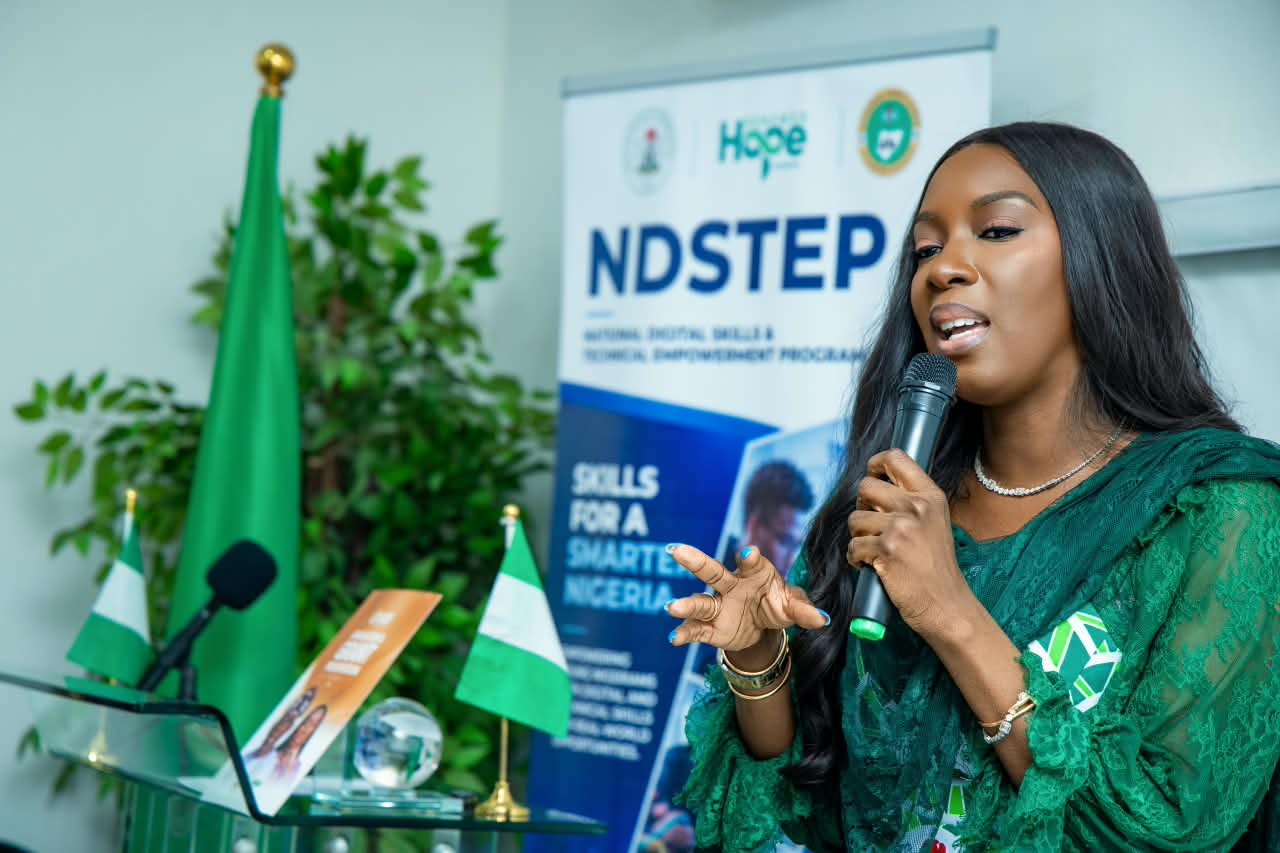
The Federal Government has intensified its digital inclusion and skills empowerment drive with the distribution of digital devices to media practitioners and social media partners as part of efforts to equip Nigerians with the tools required to participate in the digital economy.
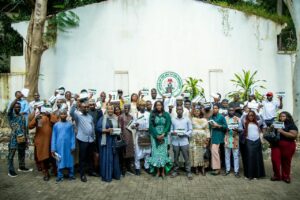
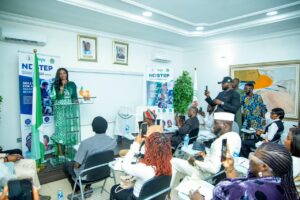

The initiative was highlighted during a Media Information and Empowerment Programme organised by the Office of the Senior Special Assistant to the President on Technical, Vocational and Entrepreneurship Education (OSSAP-TVEE), Dr Abiola Arogundade.
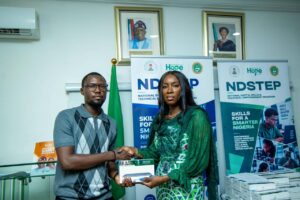
At the programme, participating media and social media partners received digital devices under the government’s digital skills and technical empowerment initiative.
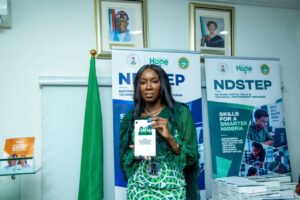
Arogundade said the intervention was designed to address the digital access gap confronting millions of young Nigerians, particularly artisans, small business owners, creatives and other entrepreneurs who possess skills but lack access to laptops, smartphones and other digital tools.
She explained that digital devices should no longer be viewed as luxury items, stressing that they had become essential tools for accessing customers, obtaining professional certifications, expanding businesses and participating in the global economy.
According to her, many talented Nigerians are capable of competing globally but remain excluded from opportunities because they lack the necessary digital tools.
“Across this country, millions of young Nigerian street artists, artisans and small entrepreneurs have the skill and drive to compete in the digital economy but lack laptops and other devices,” she said.
Arogundade said the Federal Government was taking the empowerment programme to different states across the country to ensure that more Nigerians could acquire relevant skills and access the tools needed to turn those skills into sustainable livelihoods.
She noted that the media was an important component of the initiative because journalists and digital content creators play a critical role in informing the public about government programmes and opportunities.
She said it was important to empower media practitioners alongside technical trainees so that they could better understand and communicate the impact of the programmes to Nigerians.
“We cannot keep empowering technical people and forget the media—the people helping us pass this word to the world,” she said.
The presidential aide also disclosed that the broader empowerment programme had already produced beneficiaries who had gone on to establish themselves and generate income from the skills acquired.
She said the programme was also targeting younger Nigerians, noting that the government had extended empowerment activities to secondary schools by providing laptops and training opportunities for teachers and students.
Arogundade said the ultimate objective was to reach as many young people and less-privileged Nigerians as possible with practical, marketable skills and digital tools.
She stressed that the empowerment initiative was not a publicity-driven intervention, explaining that the programme had been running for about three years.
The programme is being implemented alongside the National Poverty Reduction with Growth Strategy (NPRGS), which is expanding from Abuja to other parts of the country. The Federal Government recently announced that the initiative would move to Oyo, Enugu and Kebbi states, with 1,200 young Nigerians expected to benefit from the initial phase.
In Oyo State, the training is scheduled to begin on September 28 and run until October 9, with beneficiaries receiving training in Graphics/Artificial Intelligence, Makeup and Fashion Designing. Participants are also expected to receive relevant starter kits, including laptops for Graphics/AI trainees, makeup kits and sewing machines.
Arogundade further disclosed that 500 tablets would be distributed to young Nigerians during the October 9 graduation and grand finale in Oyo, as part of the Federal Government’s digital empowerment drive.
She said the programme would subsequently move to other states, with the skills offered tailored to the economic opportunities and needs of each location. Enugu, for instance, is expected to focus on makeup, solar energy installation and fashion designing, while Kebbi will offer training in Graphics/AI, fashion designing and agriculture, including yoghurt production.
The Senior Special Assistant urged media practitioners and other partners to help disseminate information about the programmes to ensure that more Nigerians are aware of and can access the available opportunities.
She said the government’s broader objective was to equip Nigerians with practical skills, digital tools and opportunities to become self-reliant, establish businesses and participate effectively in the global economy.
The initiative forms part of the Federal Government’s wider poverty-reduction and youth empowerment agenda, which seeks to reduce unemployment and underemployment, promote entrepreneurship and contribute to the target of lifting 100 million Nigerians out of poverty within 10 years.


