



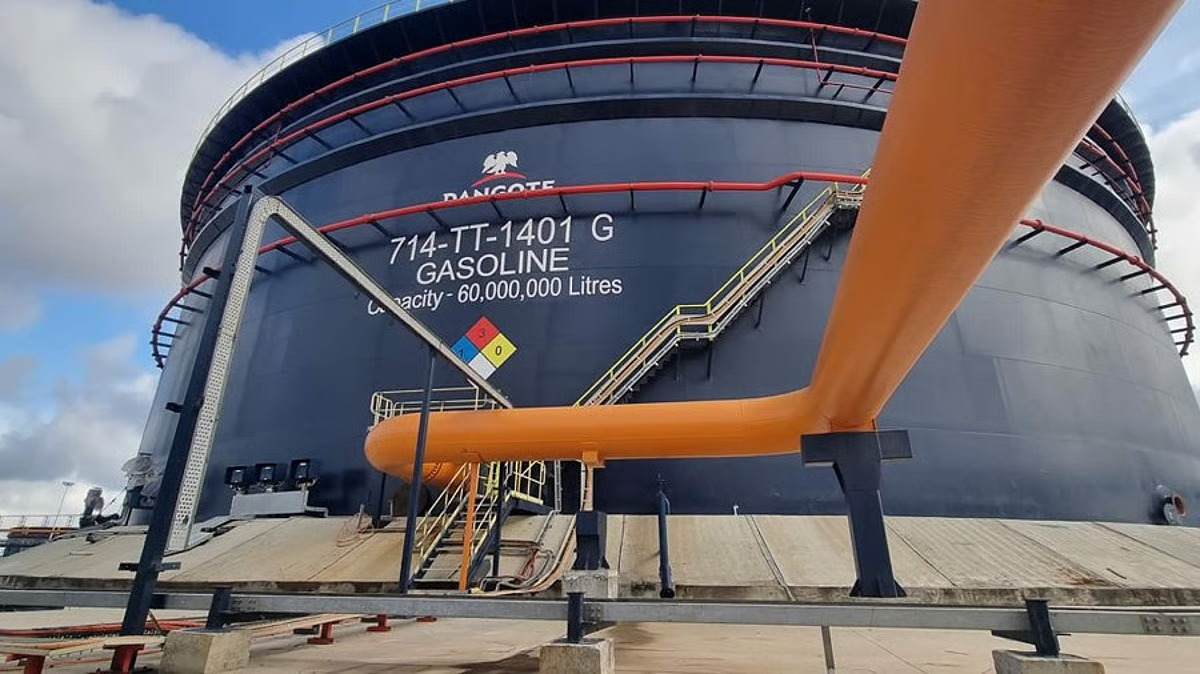
Dangote Refinery is preparing for a new phase of expansion that could transform it from Nigeria’s largest industrial project into one of the most influential energy businesses in the world.
The company plans to invest approximately $14.3 billion to double its refining capacity by 2029, develop additional petrochemical operations and construct a second refinery in Kenya. It is also preparing an initial public offering expected to raise about ₦2.15 trillion, or $1.63 billion.
Coming at a time of global pressure on fuel supplies, the plans are about more than increasing production. They represent an attempt to position an African company at the centre of a changing international energy market.
From import dependence to export ambition
Nigeria has spent decades exporting crude oil and importing large quantities of refined petroleum products. That contradiction weakened the country’s energy security, consumed foreign exchange and left consumers exposed to disruptions in international fuel markets.
The Dangote Refinery was developed to change that equation.
Located in Lagos, the refinery has a production capacity of approximately 650,000 barrels per day. The proposed expansion would raise that capacity to about 1.4 million barrels per day, placing it in the same range as India’s Jamnagar facility, currently regarded as the world’s largest refinery complex.
The significance extends beyond Nigeria. Many African countries lack sufficient refining capacity and depend on fuel imported from Europe, the Middle East and other regions.
A larger Dangote operation could supply more African markets, shorten supply routes and reduce the continent’s exposure to disruptions outside its borders.
Global disruption creates an opening
The company believes pressure on international fuel supplies could continue beyond the present conflicts affecting the Middle East and Europe.
Damage to refining infrastructure, low inventories and high utilisation rates across existing facilities have increased concerns about the availability of refined products. These conditions have created an unexpected commercial opportunity for refiners capable of supplying underserved markets.
Dangote Refinery has already benefited from the changing environment. The company reportedly recorded a profit of $1.82 billion during the first half of 2026, recovering from a $476 million loss in the corresponding period of the previous year.
This turnaround suggests that the refinery is beginning to move beyond its expensive construction and early operational difficulties. The next challenge will be turning a favourable market environment into a sustainable business.
Taking the company to the public
The proposed initial public offering is another important part of the expansion.
Nigeria’s Securities and Exchange Commission has approved an offer involving approximately 4.1 billion ordinary shares priced at ₦525 each. The offer is expected to run from September 14 to October 13 and will target retail investors as well as larger institutions.
The listing could become Africa’s largest share sale.
Opening the refinery to public investors would provide new capital for expansion while allowing Nigerians and other investors to own shares in one of the continent’s most important industrial assets.
However, a successful public offer will require more than national pride. Prospective investors will examine the company’s valuation, debt, profitability, governance, operating costs and exposure to political and regulatory decisions.
Some analysts have already questioned how the refinery’s reported valuation compares with those of established international refining companies. The company will need to demonstrate that its growth projections justify the price being placed on the business.
Kenya introduces a continental dimension
The plan to establish a second refinery in Kenya could be as consequential as the Nigerian expansion.
East Africa depends heavily on imported refined products. A refinery located within the region could reduce transportation costs and improve the reliability of fuel supplies to Kenya and neighbouring markets.
It could also give Dangote a stronger position on both sides of the continent, with Nigeria serving West and Central African markets and Kenya providing access to East Africa.
Yet the Kenya project will face its own questions. Financing, regulation, infrastructure, environmental concerns and agreements with the host government will influence whether the proposal becomes operational.
Africa has announced several ambitious industrial projects that never moved beyond planning. Execution will therefore matter more than scale of ambition.
A bigger test for African industrialisation
Dangote Refinery is frequently presented as evidence that Africa can build industrial projects on a global scale. Its proposed expansion will test that argument.
If successful, it could reduce fuel import dependence, deepen petrochemical production, support regional trade and demonstrate that an African company can compete in a capital-intensive global industry.
But size alone will not guarantee economic transformation. The refinery’s success must also produce reliable supplies, competitive prices, employment, transparent governance and stronger connections with other African businesses.
The opportunity is clear. A global energy market facing disruption needs additional refining capacity, while African economies need greater control over the products they consume.
Dangote Refinery is attempting to meet both needs. Whether it can do so will depend on how effectively it converts a $14.3 billion ambition into functioning capacity across the continent.


