



By Ameh George
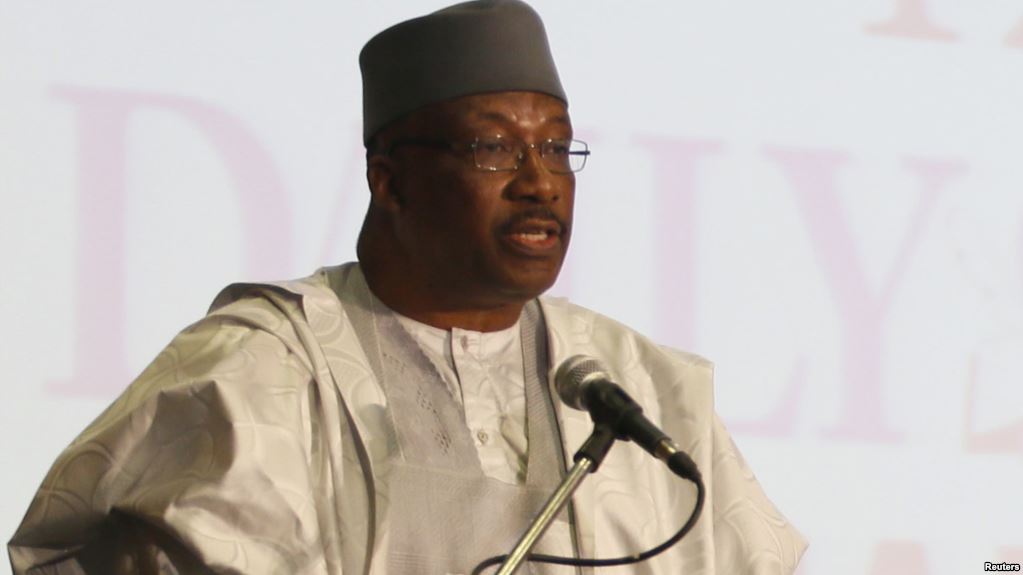
Nigeria’s Ambassador to China, Amb. Abdulrahman Danbazau, has called for stronger Nigeria-China cooperation in lithium battery manufacturing, urging Chinese investors to move beyond mineral processing to establishing production facilities in Nigeria.
Dambazau made the appeal in an interview with journalists during the African Mainstream Media Workshop organised by the International Department of the Communist Party of China in Beijing.
The ambassador said Nigeria’s abundant deposits of critical minerals, including lithium, provided an opportunity for the country to transition from a raw material exporter to a manufacturing hub.
He said the Federal Government was committed to ensuring that Nigeria derived greater value from its natural resources through local processing and manufacturing.
Dambazau said that the Nigerian government was encouraging Chinese companies operating in the country to expand their activities beyond processing minerals to producing finished products.
“What we are encouraging the Chinese investors to do is to make Nigeria the hub of manufacturing of batteries in Africa, so that not just Africa, even from Europe, they should come to Nigeria to purchase lithium batteries,” he said.
He also added that developing a battery manufacturing industry would create jobs, promote technology transfer and support Nigeria’s industrialisation drive, particularly for its youthful population.
According to him, Nigeria has the resources required for such an industrial push, while China has the technology and manufacturing experience that can support the country’s development objectives.
The envoy said the partnership would also contribute to reducing poverty by creating employment opportunities and expanding economic activities.
He noted that Nigeria’s engagement with China was anchored on existing frameworks, including the Comprehensive Strategic Partnership between both countries and the Forum on China-Africa Cooperation (FOCAC).
Dambazau added that Nigeria was also seeking to maximise its relationship with China by promoting cooperation in priority areas such as manufacturing, agriculture, healthcare, science and technology.
He stressed that partnerships must be structured in a way that protected Nigeria’s interests while promoting shared benefits between both countries.
The ambassador said Nigeria would continue to engage Chinese investors and stakeholders to support economic transformation and strengthen bilateral ties.
Malaysia Seeks Feedback From Foreign Journalists To Strengthen Diplomatic Communications
By Ameh George
The Malaysian Government has pledged to leverage feedback from foreign journalists to strengthen diplomatic communications.
Mr. Zul Hamzah, Head of Corporate Communications, Malaysia Ministry of Foreign Affairs, made the pledge while playing host to 13 visiting foreign journalists from Africa, Asia and Europe.
Hamzah explained at the opening session of the event that participants’ feedback would help shape the country’s diplomatic and foreign policy communications across their respective countries and regions.
“The presentation that you will be doing on the final day, that is what we will use as one of the bases for our diplomatic or foreign policy communications within not just your country, but also specifically within your region,” he said.
He said the initiative reflected Malaysia’s evolving communication strategy aimed at improving how the country projected its image and engaged foreign audiences respectfully.
According to him, the programme seeks not only to showcase Malaysia but also to obtain objective feedback on how the country is perceived internationally.
Hamzah said Malaysia’s foreign policy remained anchored on the principles of mutual benefit and non-interference, shaped by its post-colonial experience.
“Being a country that was colonised, you realise the horrors of it; therefore, you do not inflict upon others,” he said.
He urged participants to assess whether Malaysia’s engagement approach was viewed as respectful and mutually beneficial in their respective countries.
According to him, such perspectives will help strengthen Malaysia’s diplomatic communication and international outreach in the years ahead.
The opening session also featured a group dynamics exercise facilitated by Mr. Zikry Kholil, who engaged participants in simulations designed to build critical thinking, diplomatic negotiation and nation-building skills.
The 11-day programme, organised under the Malaysian Technical Cooperation Programme (MTCP), is designed to provide participants with first-hand exposure to Malaysia’s governance, foreign policy, development initiatives and cultural heritage.
The initiative, which is under the auspices of the Malaysia Foreign Media Visitors’ Programme (MFMVP) drew participants from Nigeria, Russia, Ethiopia, Morocco, Algeria, Kenya, Uganda, Vietnam, Indonesia and Bhutan.


