

Back in March, an email landed in my inbox from Irish airline Ryanair asking me if I was ready for my “next Moroccan adventure”.
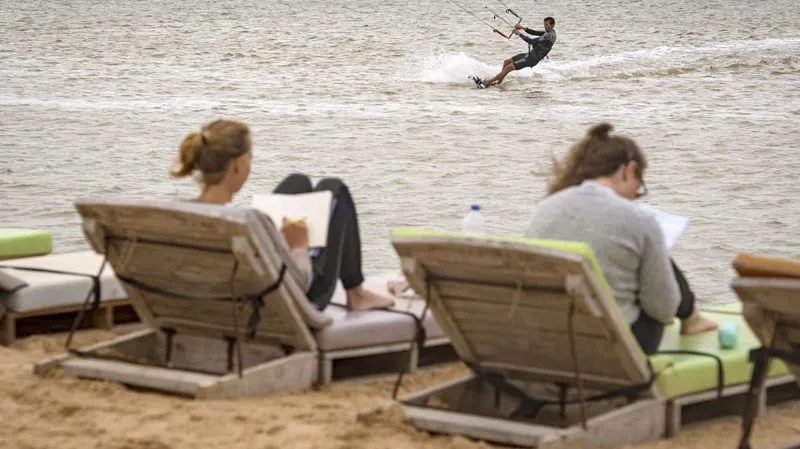
Sprawling along a windswept peninsula where the Sahara meets the Atlantic, the city of Dakhla certainly looked attractive.
I would have to make my way to Madrid first, but from the Spanish capital return flights to Dakhla start from just €30 ($35).
There are dozens of accommodation options too, from hostels to brand new luxury getaways advertising the area as Morocco’s hidden gem.
But, despite what the adverts and websites say, any tourist making the trip would be landing in one of the world’s longest ongoing territorial disputes.
That is because Dakhla is in Western Sahara, an area which the United Nations classifies as a “non-self-governing territory”. By this it means that the local population isn’t able to govern itself.
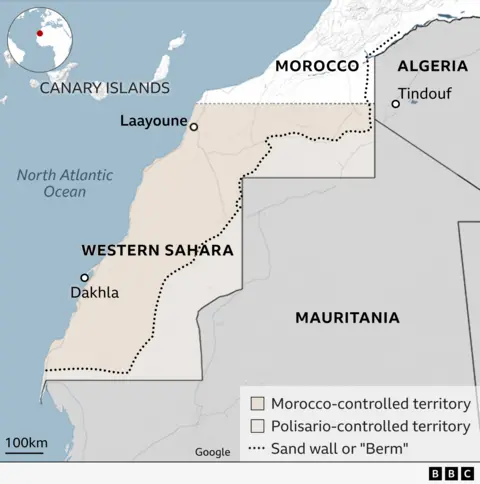
Instead, some 80% of Western Sahara is occupied and administered by Morocco, its northern neighbour. Morocco considers Western Sahara to be part of its sovereign territory, calling it its “southern provinces”.
The UN has consistently pushed for a solution to the 50-year dispute, including a referendum, but the indigenous people of the area have never been able to vote for their own future.

Rights groups and legal experts tell the BBC that marketing and labelling Western Sahara as part of Morocco raises serious concerns from an international law perspective, and promotes the legitimisation of Morocco’s occupation.
The Moroccan government has not responded to a request for a comment.
Visitor numbers to Morocco-controlled Western Sahara have risen by more than 50% over the past seven years, data from the Moroccan Ministry of Tourism shows. They jumped from 490,297 in 2019 to 743,133 in 2025.
The boom is being fuelled by expanding air links. Alongside Morocco’s national carrier Royal Air Maroc, airlines including Ryanair, Transavia France and Binter Canarias now operate direct routes from Madrid, Paris and the Canary Islands respectively.

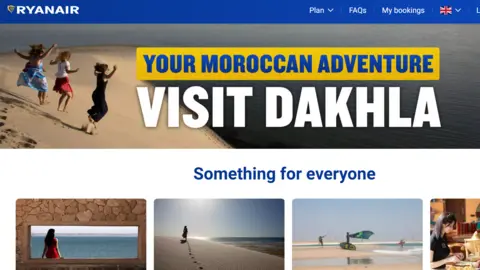
Tom Ruck, 29, is one UK tourist who recently flew to Dakhla from Madrid with Ryanair.
“You’ve got quite a lot of resorts being built, however they were very, very empty ” he says.
Ruck adds that there were “a few other tourists knocking about for a summer family holiday kind of thing”, but that it “definitely felt like it was in its infancy”.
He got a Moroccan stamp in his passport, and says that Morocco’s flag flies across the city.
It comes as the Moroccan government has invested heavily in developing tourism in Western Sahara in recent years. This has attracted the airlines, with both Ryanair and Transavia France listing destinations within Western Sahara as being part of Morocco.
Transavia France tells the BBC the firm “operates flights to Dakhla in accordance with the authorisations received from the authorities”. Ryanair has not responded to a request for comment.
However, Binter Canarias, the flag carrier of Spain’s autonomous Canary Islands bucks the trend, calling the area Western Sahara. It operates flights to Dakhla as well as the territory’s biggest city, Laayoune.
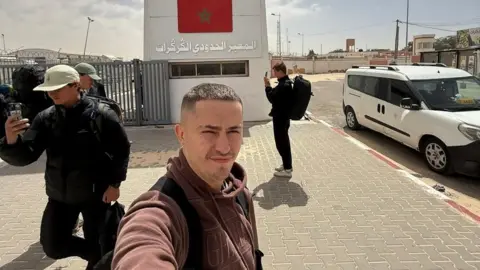
Erik Hagen, of the campaign group Western Sahara Resource Watch, says airlines referring to the territory as Morocco is both concerning and misleading.
“When companies market destinations there as Moroccan, they risk contributing to a distortion of international law and public understanding.” He adds that this raises “serious questions about corporate responsibility and due diligence in politically sensitive and illegally occupied territories”.
When you search for a place to stay in Western Sahara on three of the biggest international booking sites, Expedia, Booking.com and Trivago, they also call the location of the hotels as being in Morocco.
A spokesperson for Booking.com says: “If a particular region can be categorized as disputed or impacted by conflict, we add information to our platform to help ensure that travellers can make a well-informed choice.”
It said this is done by “advising them to consult their government’s official travel advisories as part of their decision-making process. Our approach is consistent globally.”
Expedia declined to comment, and Trivago has been approached for a statement.
Dr Andrea Maria Pelliconi, an expert in international human rights law at the University of Southampton, says airlines and booking sites “should distinguish Western Sahara as a territory with a different status from Morocco”.
She adds: “It’s possible that companies that fail to make this distinction will face litigation not only for violating international law and the Sahrawis’ [the indigenous people’s] right to self-determination, but also for issues relating to consumer protection and related information rights, and fair competition rules under EU law.”
Pressure from campaign groups has led to some change. Last year, Airbnb stopped referring to listings in Western Sahara as being in Morocco.

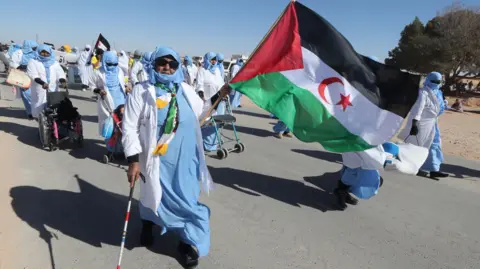
Western Sahara was a Spanish colony from 1884 to 1976. When Spain pulled out Morocco claimed the territory.
An armed conflict soon broke out between Morocco and Sahrawis fighters who formed the Polisario Front, demanding an independent Western Sahara.
A ceasefire brokered by the UN in 1991 included plans for a referendum on self-determination, but the vote has never taken place. Today, the Polisario Front controls a narrow eastern strip of the country.
The Polisario Front’s representative to the UK and Ireland, Sidi Breika, says tourism is being used to impose a “fait accompli” to Morocco’s claim. He adds that most tourists visiting “are not well informed about the whole issue”.
“All projects being carried out in the territory under illegal occupation violate the inalienable right of Saharawi people to self-determination and independence, clearly recognized by the UN.”
Breika adds that Polisario was watching Ryanair “closely” and considering legal action.
In October, the UN Security Council voted in favour of prioritising Morocco’s plan to make Western Sahara an autonomous region as the most likely way forward. It also extended the presence of the UN peacekeeping mission in Western Sahara for another 12 months.
The motion was led by the US, who under President Trump in 2020, agreed to recognise Morocco’s claim over Western Sahara in return for Morocco recognising Israel.
Despite these developments, the international legal position still stresses the need for a mutually-agreed political solution under UN supervision. The Polisario Front has also repeatedly rejected the autonomy proposal.
Breika remains defiant: “We hope Morocco understands that investing in tourism or any other economical projects does not replace the will of Sahrawis people and its inalienable right to decide its future.”