





By Rédaction Africanews with AP
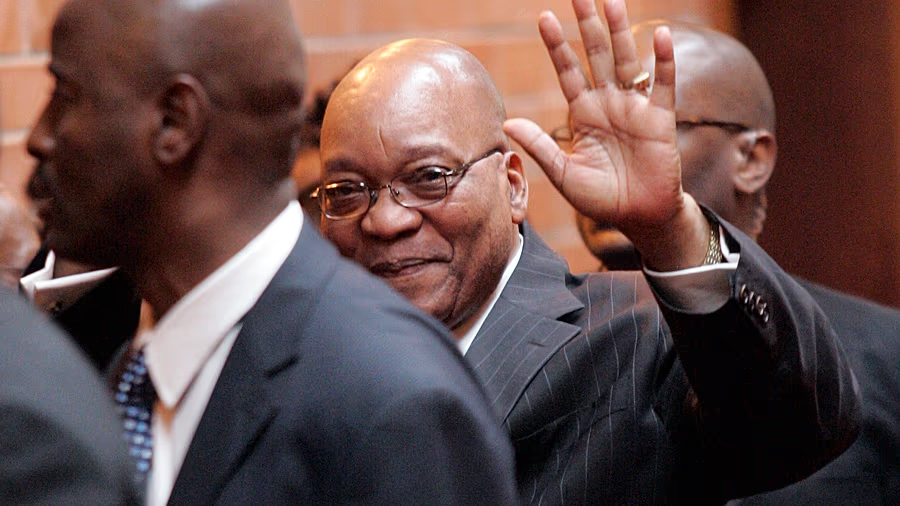
Just hours after a South African judge said the long-running graft trial of Jacob Zuma, must proceed, the former president instructed his legal team to appeal the ruling.
On Thursday, a KwaZulu-Natal High Court ordered that the so-called arms deal corruption case against Zuma and French defence giant, Thales, would go ahead on 1 February 2027.
Judge Nkosinathi Chili accused Zuma and Thales of using “Stalingrad defence”, a legal term for a strategy to slow down proceeding through constant appeals,
Chili said the “interests of justice” demanded that the case proceed.
“Without this court’s intervention, there is a likelihood of grave injustice or the administration of justice being brought into disrepute,” he ruled.
Zuma, 84, was not present for the judgement.
Thales (formerly known as Thomson-CSF) and Zuma are accused of corruption, racketeering, money laundering, and fraud related to the 1999 $2 billion arms deal.
It was to have seen the purchase fighter jets, patrol boats, and other military equipment from five European defence companies.
Zuma, who was deputy president at the time, is accused of taking bribes totalling about $250,000 from Thales in exchange for protecting the firm from an investigation into the deal.
Thales and Zuma deny any wrongdoing.
In June last year, they sought to have criminal charges against them dropped, but their application was dismissed by the same court and judge.
It was one of numerous challenges and appeals made by them which has tied the case up in legal disputes for over two decades.
In a statement on Thursday, The Jacob Zuma Foundation sharply criticised this latest ruling describing it as “totally erroneous” and accusing the court of gross misdirection in both fact and law.
Zuma led South Africa from 2009 until 2018, when the then ruling African National Congress forced him out as graft scandals engulfed his government.
He is separately accused of enabling the looting of state assets during his tenure.
In 2021, Zuma was sentenced to 15 months in jail after refusing to testify to a panel probing financial corruption and cronyism under his presidency.
He was freed on medical parole two months into his term.
The jailing sparked protests, riots and looting that left more than 350 dead, in South Africa’s worst violence since its first democratic election in 1994.


