



The first group of deportees from the United States has arrived in the Democratic Republic of Congo’s capital under a new bilateral agreement, according to government and airport sources.
Fifteen individuals—seven women and eight men, mostly Latin American migrants from Colombia, Peru, and Ecuador—landed at Ndjili International Airport after a roughly 26-hour flight routed through Dakar and Accra. The plane originated from Alexandria, Louisiana. A lawyer in contact with the group described the journey as exhausting.
Congolese officials said temporary housing has been arranged in Kinshasa while longer-term integration plans are finalized. The arrival marks the first implementation of a bilateral deal signed on April 5 under which the DRC agreed to accept non-Congolese nationals deported from the United States. The arrangement is described as temporary, with the U.S. covering logistical and technical costs.
The DRC becomes the latest African nation to participate in the U.S. third-country deportation program. Similar agreements have been reached with other countries on the continent. The move coincides with broader diplomatic efforts between Washington and Kinshasa on peace in eastern Congo and minerals cooperation, particularly around critical resources like cobalt.
No immediate details were released on the total number of deportees expected under the deal, though sources indicate additional flights could follow in coming weeks. Facilities near the capital have been prepared to receive arrivals, and the government has emphasized that the program carries no financial cost to Congolese taxpayers.
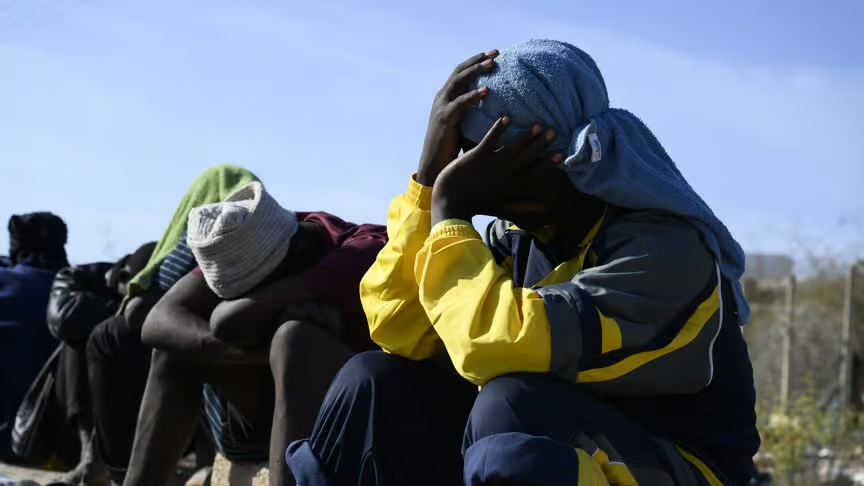
Human-rights groups and migration experts have raised concerns about the capacity of host countries to manage sudden inflows and ensure dignity and integration. For the deportees—many of whom faced U.S. court orders preventing return to their home countries—the DRC represents neither origin nor final destination, only the next uncertain chapter. Local authorities say short-term accommodation will be provided while longer-term solutions are explored.
The agreement fits into a wider U.S. immigration enforcement strategy under the current administration. It also reflects Kinshasa’s interest in strengthening ties with Washington amid ongoing regional security and economic talks. Critics, however, question the suitability of using conflict-affected nations as third-country destinations and worry about potential strain on already limited public services.
Congolese officials have stressed that the program is temporary and limited in scope. Coordination between U.S. and DRC authorities continues, with emphasis on orderly processing. Airport sources confirmed the first flight arrived quietly in the early hours, with standard immigration procedures followed.
The development highlights how migration policies increasingly intersect with diplomacy and resource interests in Central Africa. As more arrivals are anticipated, attention will turn to how the DRC manages reception, support, and eventual outcomes for the deportees. For now, the first group’s arrival opens a new and untested chapter in U.S.-Africa migration relations.


