






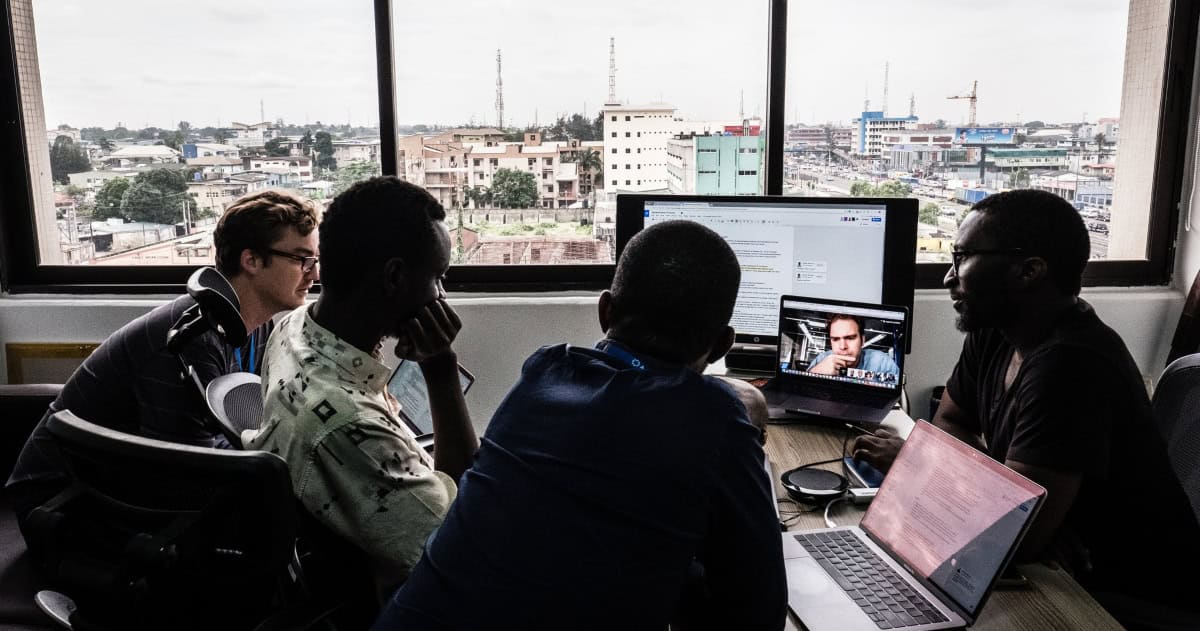
BCG analysis finds that scaling Africa’s software developer base could unlock major economic value, competitiveness and long-term growth across the continent, with the inclusion of women representing one of the continent’s most powerful yet underutilised accelerators.
Africa’s developer community is expanding faster than anywhere else in the world, new Boston Consulting Group (BCG) analysis shows, underscoring the continent’s growing influence in global technology creation. Although the continent currently has 4.7 million developers – far fewer than regions such as Asia with 73.9 million and Europe with 27.5 million – the talent base has been expanding at 21% a year between 2019 and 2024, a growth rate that outpaces every other continent.


This rapid acceleration signals a major economic opportunity for African countries to strengthen their competitiveness and build industries powered by homegrown digital skills. Within this growth lies a critical differentiator for Africa’s future competitiveness: increasing the participation of women in software development, where several markets remain significantly underserved despite proven potential.
Africa’s growth is remarkable not only for its speed but for the structural shifts underpinning it. The continent’s youthful population, expanding digital access, rising urban tech hubs and targeted national policy choices are converging to create a deep and dynamic talent pool. The report shows that while South Africa, Egypt and Nigeria have the largest absolute numbers of developers, countries like Tunisia, Kenya and Morocco are distinguishing themselves in both scale and momentum. At the same time, nations like Ethiopia and Angola are recording some of the fastest increases in developer activity from modest starting points, underscoring how intentional ecosystem design can change national trajectories.
The report highlights that women remain a vastly underrepresented share of this fast‑growing developer population, a strategic gap that, if closed, could significantly accelerate the continent’s digital capacity. Tunisia stands out as a continental leader, reaching 24% women developers by 2024, the highest on the continent, driven by a decade of focused growth and inclusion efforts. By contrast, major tech hubs such as Morocco and Egypt count fewer than 14% women developers, despite their large and rapidly expanding tech ecosystems.


This disparity demonstrates that population size alone does not define digital strength or gender inclusion. Instead, countries that have invested in education systems, digital policies, research networks and supportive tech ecosystems are emerging as leaders. Tunisia’s progress provides strong evidence that gender inclusion responds to intentional policy choices, and that scaling women’s participation represents an untapped growth lever for many African markets.
Morocco, for example, has seen exceptional developer community expansion driven by sustained public investment and a strong innovation agenda. Cities like Ben Guerir have expanded their developer communities fiftyfold in a decade, becoming a major node in the country’s technology landscape, supported by university infrastructure and committed industrial champions. Yet Morocco’s lag in growing its female developer base highlights a significant opportunity to deepen the impact of its broader innovation strategy.
Hamid Maher, Managing Director and Senior Partner at BCG, Casablanca and Head of BCG’s Tech Hub in Africa, and one of the report’s authors, notes that this shift is both intentional and transformative. “What we are witnessing across the continent is the result of deliberate investment – policies that prioritise skills, education systems aligned to future industries, and ecosystems designed to unlock talent at scale. Countries that take this seriously are accelerating far faster than demographics alone would ever predict,” he says.


Countries like Kenya and Rwanda further illustrate that smaller economies with vibrant ecosystems can outperform far larger markets in gender inclusion, reinforcing that policy, ecosystem alignment and cultural support rather than scale determine outcomes. These examples highlight a clear pattern across the continent: where policy, education and industry alignment come together, developer communities flourish, and women’s participation rises accordingly.
As these communities grow, they are also strengthening the foundations needed for sustainable innovation and long-term economic expansion. The report finds a clear connection between countries with large developer populations and those producing greater volumes of scientific research. In 2020, Morocco and Egypt recorded the highest number of scientific publications in Africa, mirroring their strong developer concentrations. Expanding women’s participation in software development stands to amplify this effect, unlocking new talent, strengthening research ecosystems and accelerating Africa’s readiness to shape the next wave of global digital and AI technologies.
Across the continent, from Tunis to Nairobi and Casablanca to Cape Town, developer communities are rewriting Africa’s technology narrative. Their growth is expanding economic participation, enabling knowledge creation, strengthening local industries and contributing to new sources of productivity and global engagement.
As Maher explains, “Developing the continent’s developers is not simply a digital agenda, critically, it’s an economic one. When countries nurture strong developer communities, they create the conditions for new businesses to emerge, for scientific output to grow, and for innovation to flourish. This is how long-term national competitiveness is built.”
He concludes, “Building Africa’s developer base is one of the highest-return investments countries can make. It strengthens resilience, drives economic diversification and unlocks the growth engines of the future.”


